Sappho Bookshop, Cafe & Bar: A wonderful place

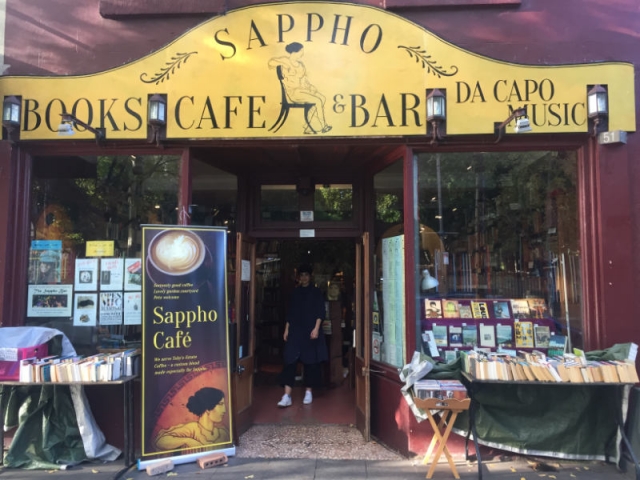
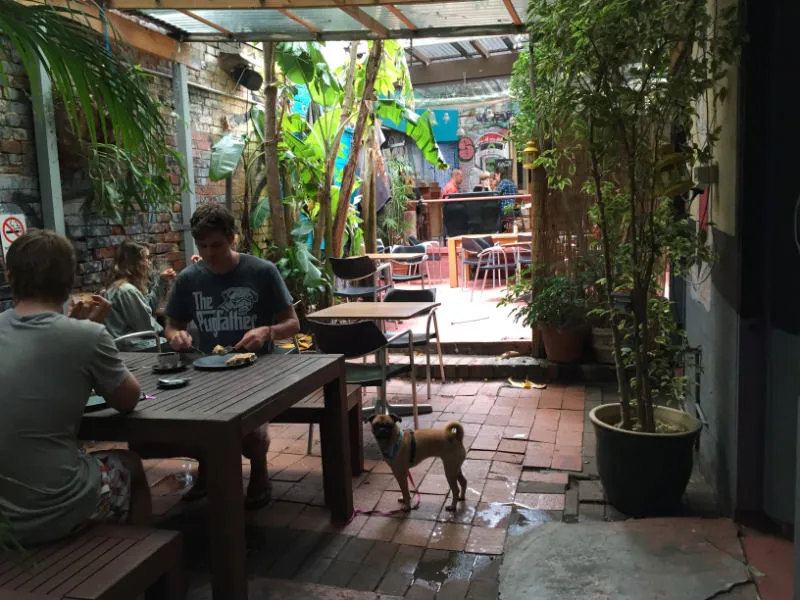
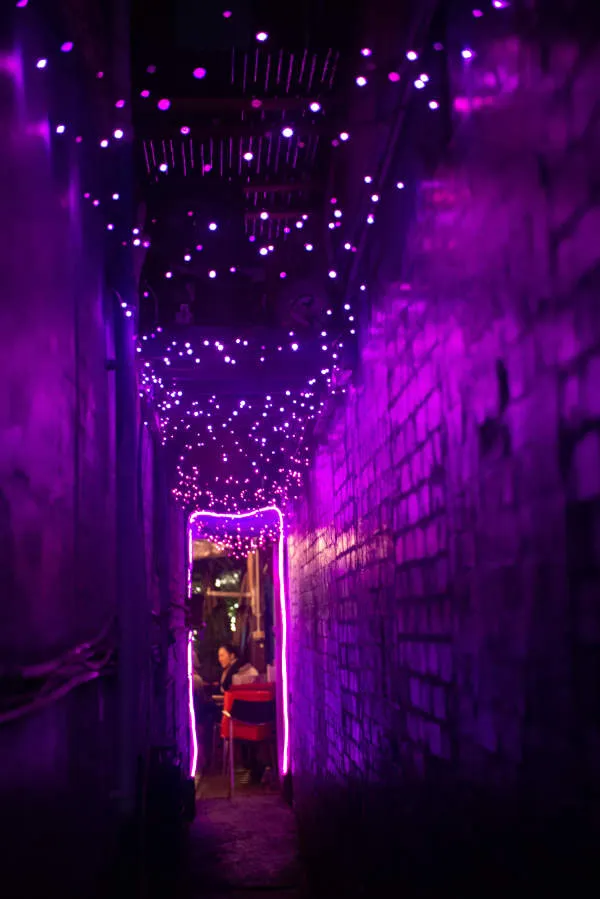
Tucked through a long, dimly lit alleyway is the courtyard of Sappho books, cafe & bar, a place surrounded by brick walls covered in graffiti and greenery, a warm, intimate air, and tables filled with people chattering and laughing. Sappho is a multi-functional community space located in Glebe that functions as a second-hand bookstore and cafe/bar, with a courtyard area that acts as a place for social gatherings, frequently hosting events such as live music and their monthly poetry nights. Initially opened in 1996 by Meredith Baillie on a different location on the same road, Sappho acquired the abandoned Glebe Youth Centre in 2004 and transformed it into where the current Sappho is located. Additionally in 2006, Da Capo music, founded by Patricia Baillie, moved in with Sappho as well. In the courtyard, the graffiti has been preserved on the walls… And that’s about all I know currently!
From:https://www.sapphobooks.com.au

Sappho is an organisation I am very interested in working with due to their welcoming and intimate vibe. I frequently come in for the monthly poetry nights, where featured poets read aloud their work, as well as having open mic segments for anyone who wants to read their poetry. I think the strongest aspect of Sappho is the arts-focused space that they have crafted, which is most apparent within these nights. When someone is reading their poetry, you can tell everyone is listening with intent and focus. There is an unspoken understanding here, an air of respect and appreciation towards the arts. There is genuine joy as people are sharing their poetry, and I have heard some breathtaking, devastating, and beautiful things in that courtyard. Having read some of my own poetry on these nights, this experience truly cannot be matched anywhere else, and it would be an honour to discover more of their history and document it for the public. It is truly a wonderful space.
From:https://www.sapphobooks.com.au

Currently, I am in discussion with Sappho to develop an ‘about us’ webpage that details what Sappho does and how it functions within the community, as well as outlining the history of Sappho and the youth hostel it is built on. That’s all I have concretely right now, but I am also thinking of talking about the founder, Meredith Baillie and her sister, who founded Da Capo music, Patricia Baillie. To be honest, I have some slight concerns currently in how much information I can work with/will get, as I haven’t had too much communication with Sappho yet and there isn’t much information on the history of Sappho online. (Which is actually probably a good thing, as it means my public history work is actually needed! I just hope I can do it earnestly and well.)
A Solution to Isolation: The Community of Learning in The Hills

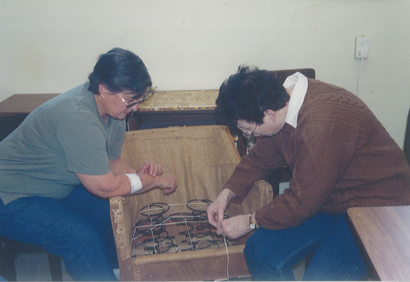
A bell rings at 10.30am around the quad, letting everyone know it’s time for morning tea. In Room 4 at the Balcombe Heights Estate, the soft furnishings and upholstery class take a break from toiling away on their various projects they have been steadily working on throughout the term and look at the progress they’ve made. They give each other tips on how to hammer in that stubborn nail or advice on what they should do with this new fabric they found as I keenly observe this wonderful space of knowledge-sharing and skill-building.

Soft furnishings and upholstery class tutor, Carolyn Evans (right), restoring an armchair.

When I first contacted the Hills Community Aid (HCA), Executive Officer Mici Beer immediately knew she wanted to spotlight their biggest program, Learning in The Hills (LITH). They had already published a book on the first 25 years of HCA and have a book in the works on the next 30 years, but there were still so many stories and experiences to be told since the establishment of LITH in 1983. It seemed fitting for me to collect oral histories and I was very fortunate to lead a discussion amongst people who have had a strong connection to this program for decades and listen to the memories brought up by these conversations.

LITH was started by Betty Kean who was already involved in HCA but noticed the isolation felt by many women in the area. She realised there needed to be spaces for women outside of the home to socialise and learn. It was a reckoning with the identity of women to perceive themselves as an individual before being a wife or mother. Now LITH has over 800 enrolments and runs an amazing range of courses over four terms such as oil painting, crocheting, dressmaking, yoga and English language which is particularly significant for migrants in the area who resonate with feeling isolated.

As someone who has lived in The Hills all my life, I have always had a desire to know more about this area and working with the LITH community has already enlightened me immensely. It continues to prove itself as a gift that keeps giving to anyone lucky enough to be a part of it. The Hills area used to be known as ‘Nappy Valley’ because of all the young families in the district so LITH ran a childcare in the 1980s before it was even really an established business in Australia which opened so many avenues for women in the area to work or study. The program provided a new opportunity to socialise in affordable classes that also taught valuable skills, serving as a reminder that learning should not defined by age nor does it require a diploma at the end to be proud of what you have achieved. Perhaps most importantly, it gave new meaning to being independent: you can accomplish anything, but you don’t have to do it alone. 

Long-time student, Jan Davis spoke passionately to me about how their upholstery classes resurrect forgotten pieces of furniture. It is fitting for a program like Learning in The Hills which has evolved into a place of giving new life to those in the area who have felt isolation and has continued to welcome folks into a loving community.

Growing Home: The Story of Green Connect Farm

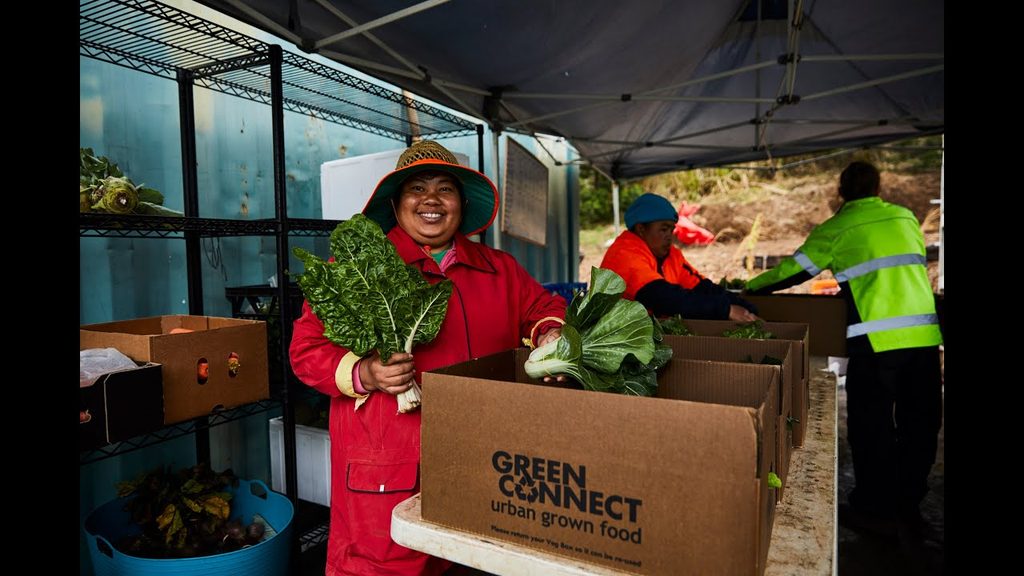
Behind Warrawong High School, on a steep hillside south of Wollongong, Dharawal Country, eleven acres that were once lantana and dumped rubbish now grow vegetables, herbs, honey and eggs. This is Green Connect Farm, and the people who work it are the reason I chose it for my public history project.

IMAGE: Sourced from Green Connect Farm – https://green-connect.com.au/work/

Green Connect began in 2011 as a small social enterprise, established through SCARF to create paid work for former refugees in waste recovery. It has since added labour hire and grown into an employer of more than 100 refugees and young people. It has also opened its doors to young Australians facing barriers such as insecure housing, mental illness or unsafe homes. In 2021 it was the only Australian recipient of a Commonwealth Secretary-General’s Innovation for Sustainable Development Award, and it describes its permaculture farm as one of the largest urban farms of its kind in the world. Today the farm supplies weekly vegetable boxes to more than 160 Illawarra households and opens its gates for tours and workshops.

What sets Green Connect apart is its model. Many refugees arrive with real farming expertise, often as subsistence farmers, yet face a wall of barriers such as a new language, unfamiliar transport, and frequently no paid work history at all after years in camps. Reports suggest only about 31 per cent of humanitarian visa holders have jobs after five years. Green Connect starts from what people already know and treats the relationship as an exchange, because Australians have much to learn about chemical-free growing. It even trains people so they can leave: staff are supported into jobs with other employers, and that counts as success.

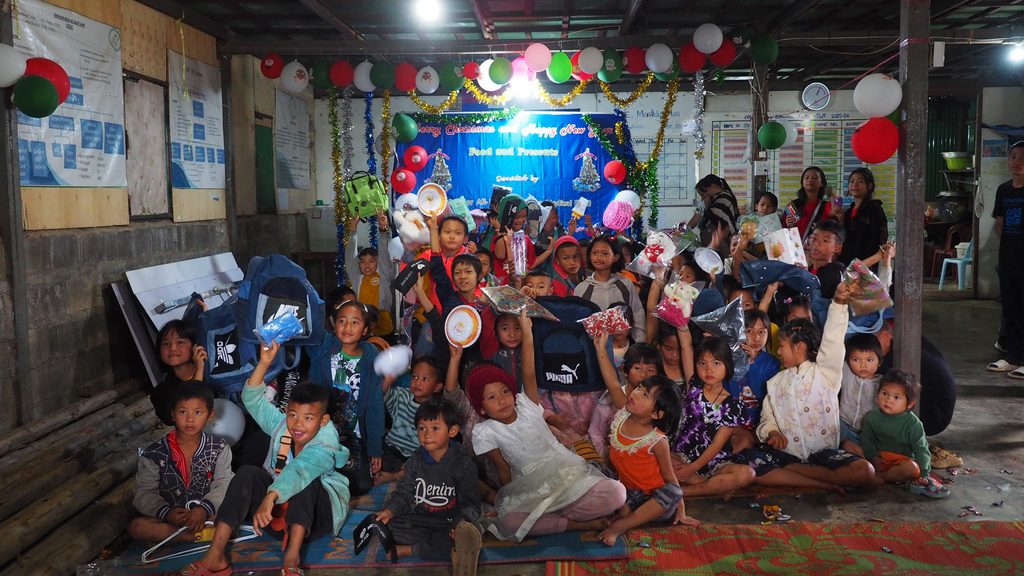
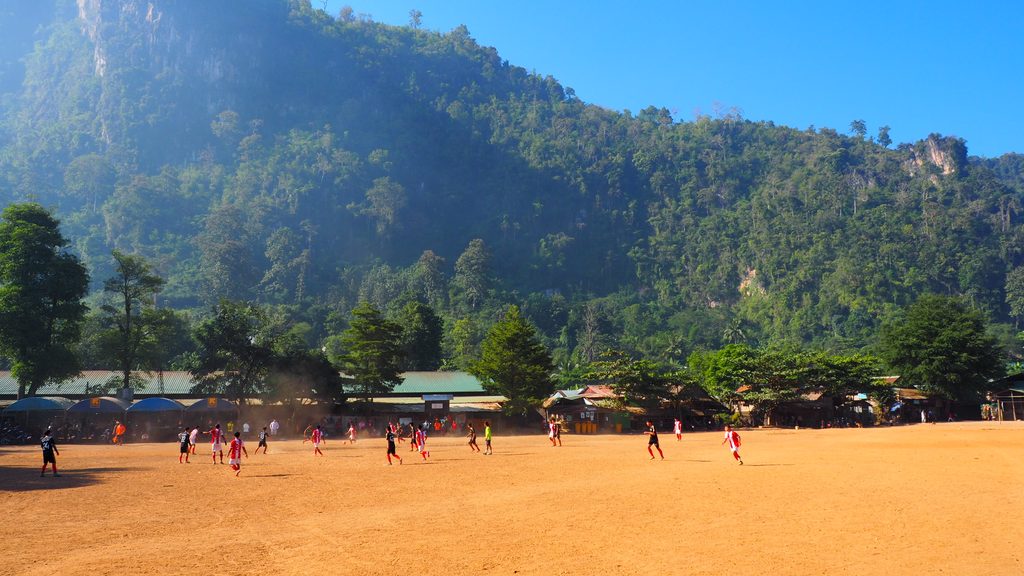
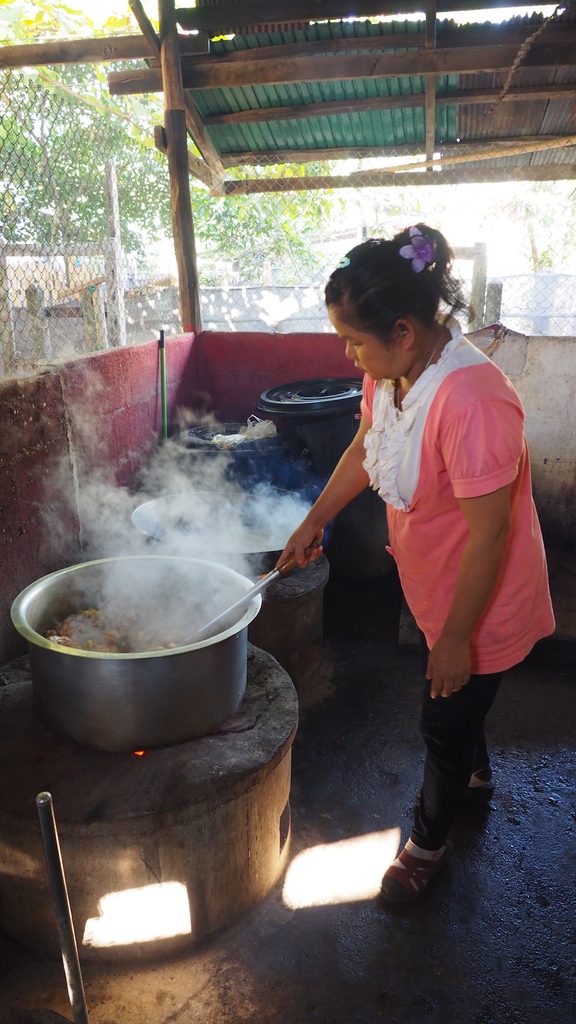
The Illawarra is home to one of Australia’s largest Karenni communities, many of whom fled decades of conflict in Myanmar. That conflict deepened into nationwide civil war after the military seized power in February 2021, displacing millions. Many cross the Moei River into Thailand and into camps like Mae La, the largest of nine along the border. Yet this “forgotten war” rarely makes headlines here.

IMAGE: Evie Jones, makeshift classroom inside Mae La Refugee Camp, 2025. OLYMPUS DIGITAL CAMERA
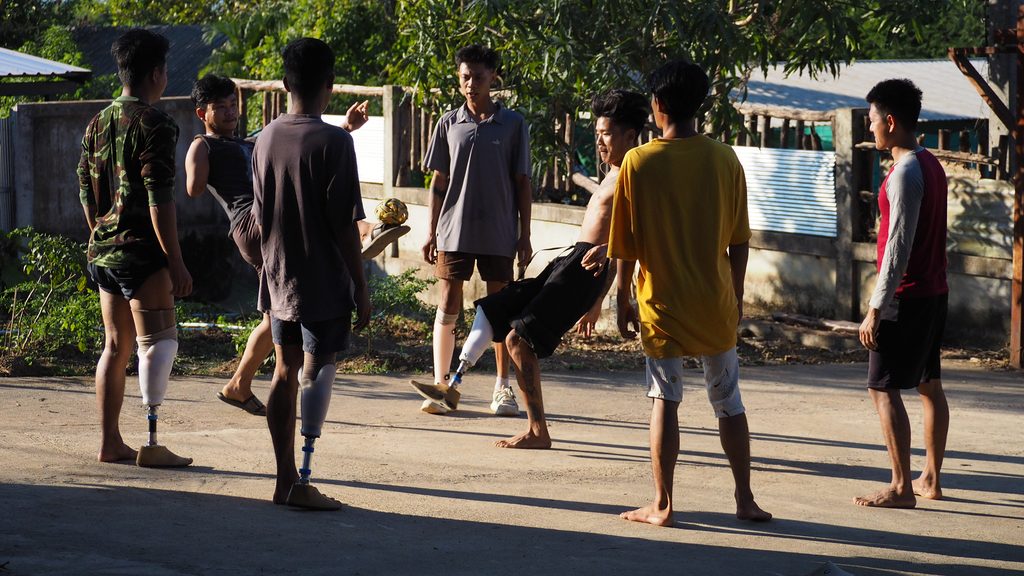
IMAGE: Evie Jones, recovering soldiers playing a game of chin lone inside PDF safehouse, 2025. OLYMPUS DIGITAL CAMERA

Migration has always been central to Australia’s national story, and just as central to its politics. In a time of rising living costs, tight job markets and nativist resurgence, newcomers are too easily reduced to numbers. Immigration is often framed as a burden on housing, wages and services, yet a farm where newcomers help grow food and employment for others tells another story. Public history can answer with people. Refugee stories are too often told about people rather than by them.

My project will record oral histories with the people of Green Connect, shaping them into documentary-style video. Our history is only richer with these stories in it.

The Belvoir St Theatre: Bringing Community Together

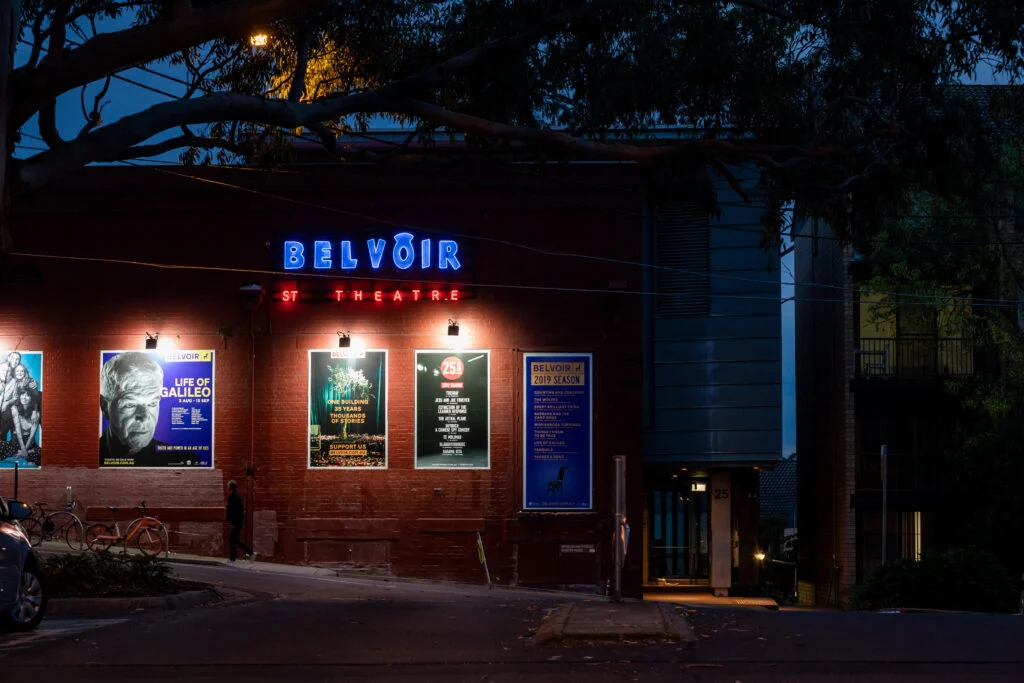
For this project I am working with the Belvoir St Theatre, a small theatre located on Gadigal land, in Surry Hills. The origin of the theatre is a story of community engagement. The theatre is housed in an old tomato sauce and salt factory, which used to be the home of the Nimrod Theatre Company. When Nimrod decided to move out of its Surry Hills location, the old factory was threatened to be bought by developers, but in 1984 a group of 600 individuals came together to save the building from developers. The theatre is beloved by theatre-goers in Sydney and has won many awards for its performances, including multiple Helpmann Awards, AWGIE Awards and Sydney Theatre Awards. The work of the Belvoir St Theatre is significant because of their dedication to telling Indigenous stories centered around Indigenous people. Indigenous performance has been a part of the theatre from its beginnings. Sydney is a diverse city, and that is also reflected in Belvoir’s shows. “The Coconut Children” is set to premiere in late November of this year and tells the story of Vietnamese-Australians. LGBTQ+ stories are also common on the Belvoir stage. 

What drew me to the Belvoir St Theatre was openness to telling different stories, both different in the meaning of diverse, but also different from other theatre companies I was familiar with. I grew up abroad and most of the plays and musicals I watched growing up were ‘the classics’, like Annie or Macbeth. Moving back to Sydney and having diverse stories at my finger tips was exciting. These were stories, experiences and perspectives I had not come across before. The theatre is also just around the corner from where I live, and walking past it has become a part of my everyday life. In some way the theatre demanded my attention. The bright red building and the pride flag painted in the entrance stands out and, to me, shows just how proud Belvoir is of its identity and history. The foyer, as well as the warehouse where the box office is located, are also decked out in posters of past Belvoir shows, highlighting both the strong identity and the history of the theatre, spanning over four decades. This pride has been very clear to me so far in this project. My main contact at the theatre has been very keen on showcasing the history of the theatre and the people behind the scenes. 

This project with the Belvoir St Theatre is an oral history in the form of a documentary film. I will interview a diverse crew of people working behind the scenes at Belvoir to tell their story of their theatre. 

The Sydney Tramway Museum: Conserving a 124-year-old Tram

The Sydney Tramway Museum was founded in 1950 and situated within Loftus in the Sutherland Shire. Since its inception, the museum has been growing its collection and site, with the current museum opening in 1982 after moving from site within the nearby National Park. Holding a sizeable collection of Sydney trams, augmented by selections from Melbourne, Adelaide, Brisbane and abroad, the museum seeks to restore and operate historic trams for visitors to view or travel on. Having a long-standing interest in everything relating to vintage vehicles, the Sydney tramway museum was an easy choice for my partner organization. 

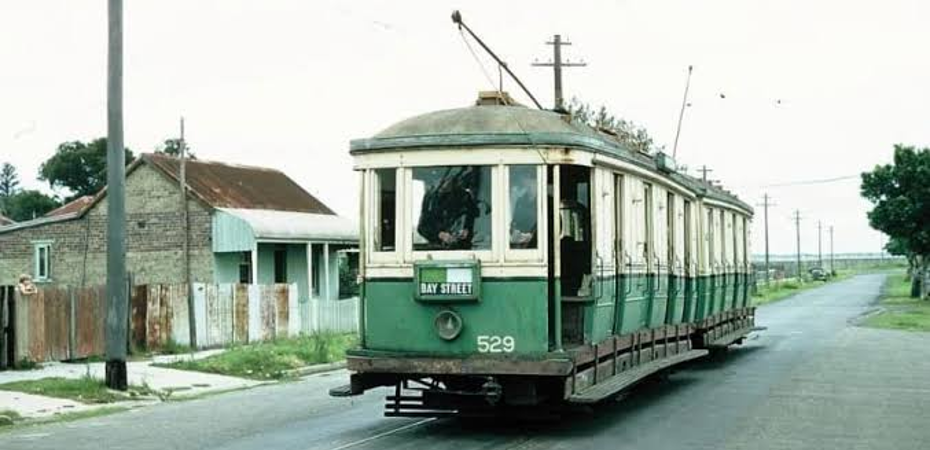
E-class Tram 529/530 operating at Randwick in the final few years of public service.

Being the only museum dedicated to the trams of the original Sydney system, the museum exhibits many trams which are one of only a few survivors, or in many cases the final example in existence. The Sydney tramway network was the largest in the southern hemisphere during the interwar years, and yet by February 1961 it had all been removed. Busses and private cars were the successors to the electric trams on Sydney’s roads, with trams hastily withdrawn from service and many thousands burned at Randwick depot. A small collection of trams was initially acquired by the Museum and stored at their site in the Royal national park, with a short stretch of track built for visitors to ride on the operational exhibits. The collection would expand dramatically with many derelict trams resurrected from farmyards or even homes before complete restorations were undertaken. The amount of knowledge and know-how of the members is astounding, with historical practices kept truly alive for both the visitors and behind the scenes.

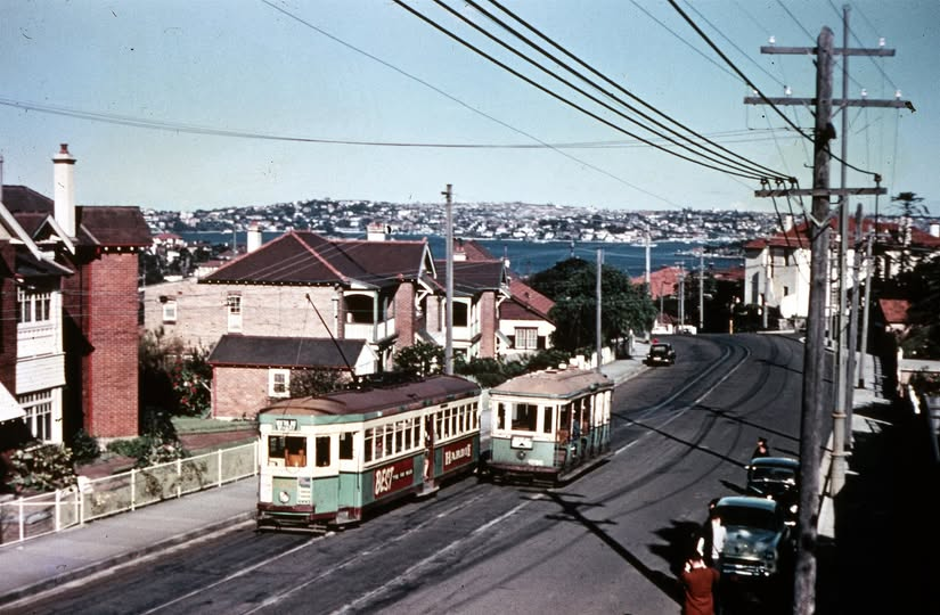
Sydney R1 and K class trams on the neutral bay service, showing the post-war corridor trams and 1900s 4-wheel trams running alongside.

My work at the tramway museum revolves around a 1902 Sydney E-class tram number 529/530. Built from 1901-1903 at Granville, the Sydney E-class tram is essentially two short 4-wheel trams that are permanently coupled together and thus operate in practice as one singular unit. This makes the E-class highly unique, not only in the fact that 529/530 is the final remaining example, but also internationally few other such designs exist. The vast majority of Sydney’s older single-bogie trams were withdrawn before 1940 as newer bogie trams, and road traffic, took over. Having been stored for several decades, a small team of volunteers have been working to cosmetically rejuvenate the tram for public display for several months. I have joined this team of volunteers and work has been progressing on both the interior and exterior of the tram. Much of this hands-on work has been incredibly rewarding and a great learning experience, I doubt many have applied Shellac to a historic bench made from Tasmanian red cedar in the last 80 years! Restoring 529/530 will complete the collection of fixed bogie trams on display, joining its fellow C, D, K and J class as incredible, and highly improbable, survivors of the Sydney system.

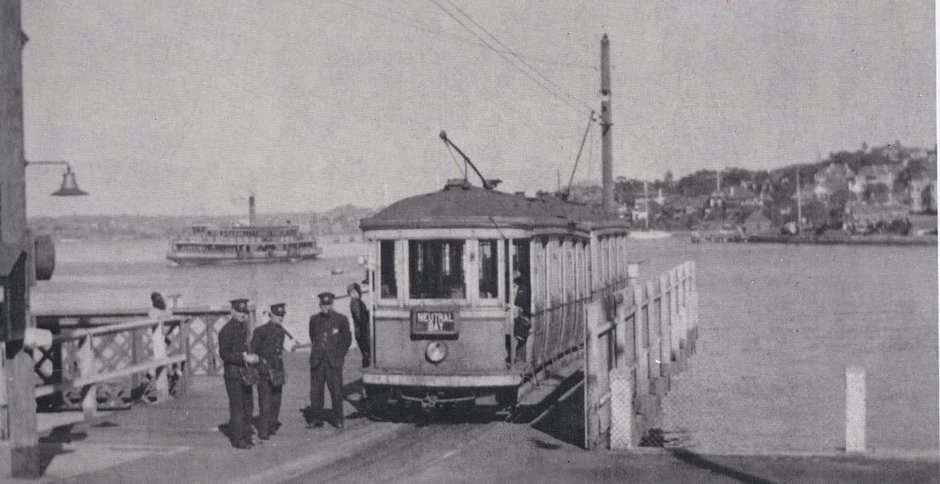
E-class pair 529/530 stand on the Neutral Bay wharf in 1944, its passengers aboard the departing ferry. 529/530 and 499/500 were the only E-class equipped with special brakes to operate the steep descent to the bay. The former retained this equipment into preservation while 499/500 was scrapped.

Beyond my relatively short time volunteering for the Sydney Tramway museum, I have already become a member of the museum and intend to continue working on many of the other trams in the collection. In addition to this, progress is underway for my own training to conduct and drive the museum’s various operational trams for the public.

City of Parramatta – Where Sydney’s second CBD meets rich history: Deepening the perception of this iconic suburb. 

My project will be a collaboration with the City of Parramatta’s Cultural Collection Services where I will be working closely with the Heritage Collection Services team to create an interpretive piece of writing that explores the central themes of this institution. This interpretive writing will be an informative educational piece for the public, where I will discuss both the historical facts but also how it connects to the individuals. Whilst also using material culture including archival objects, images, and documents as an interactive medium of learning about our history.

What drew me to this organisation is its strong focus on the local People and its recognition of the significant people and events from Parramatta’s past and how they are guiding the future. I appreciate the blend of architecture, history, culture, religion and the arts as a way to commemorate and share Parramatta’s history.

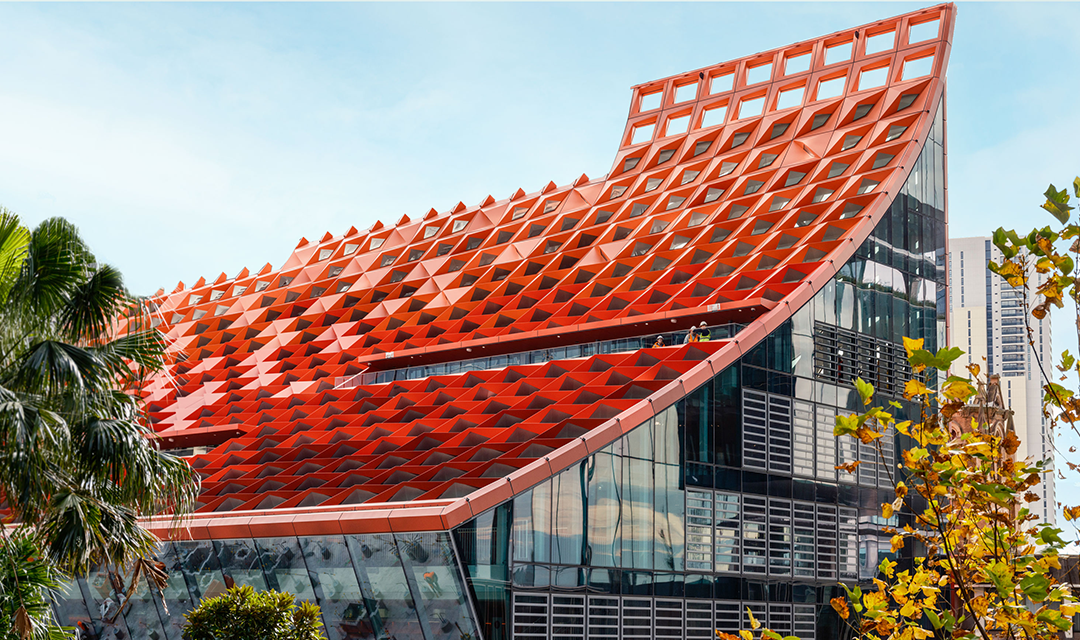
The recent opening of PHIVE in September 2023, in the heart of Parramatta’s CBD created a new “community, cultural and civic hub” for gathering. The aim of the City of Parramatta is to encourage the community to gather, learn, share ideas and develop cultural understanding and diversity. PHIVE reguarly hosts a vibrant range of performances, events, arts and music festivals.

City of Parramatta will be holding Parramatta Lanes, a food and cultural festival, celebrating local culture, produce, and art. This event is a personal favourite of mine, and will be held in less than 2 weeks, so I highlighly recommend everyone to go!

PHIVE: 5 Parramatta Square | Parramatta History and Heritage

The existing PHIVE interpretive themes, including ‘A Plentiful Place’, ‘A Gathering Place’ and ‘Parramatta People’ is central to the City of Parramatta objective of interpreting, documenting and celebrating Parramatta’s rich heritage. Parramatta’s initiative of the ‘Cultural Strategy (Creative Parramatta)’, officially adopted in 2025, advocates the importance of culture, which is readily expressed through public events, various art forms, and social practices with the aim of ‘defining our community’s values.’

Most recently, in August 2026, the City of Parramatta also officially adopted the Integrated Heritage Strategy. This initiative is a 10-year Roadmap for protecting, encouraging celebration, and promoting the histories of Parramatta, in particular, its First Nations, the Dharug People. In accordance with conserving the City of Parramatta’s significant people, heritage buildings, archaeology, natural landscapes and utilising public history to re-share with the community.

As a young historian, I hope to bring my love of storytelling to visitors, providing an engaging and educational experience, whilst also celebrating the local people and community.

Linking back to my project, an interpretive piece of narrative about historically significant corporations and movements in Parramatta will contribute to this greater movement of inclusion in historical learning. A specific area of interest for me is the preservation of items where objects are the initial item of connection. Most recently, I developed an interest in researching collections and utilising archival materials and oral histories to uncover the provenance of items and its connection to individual stories. 

The objectives and aims of the City of Parramatta drew me to this organisation. However what I was most interested in was the cultural and historical preservation of artifacts, the research done by the Heritage Collection Team (including, Cultural Collections Officers and Heritage Archivists) to uncover and develop a deeper understanding and also the assistance to community members who reach out to find out more about their family history or family heirlooms.

I hope to contribute to this purpose through creating a piece of public history that can encourage discussions and celebration. I hope my contribution becomes one of the many drops of the oceans that provides an informative, interesting and engaging way for the community to gather and learn more about the rich history of Parramatta. 

Australian Theatre for Young People: Staging youth stories for over 60 years

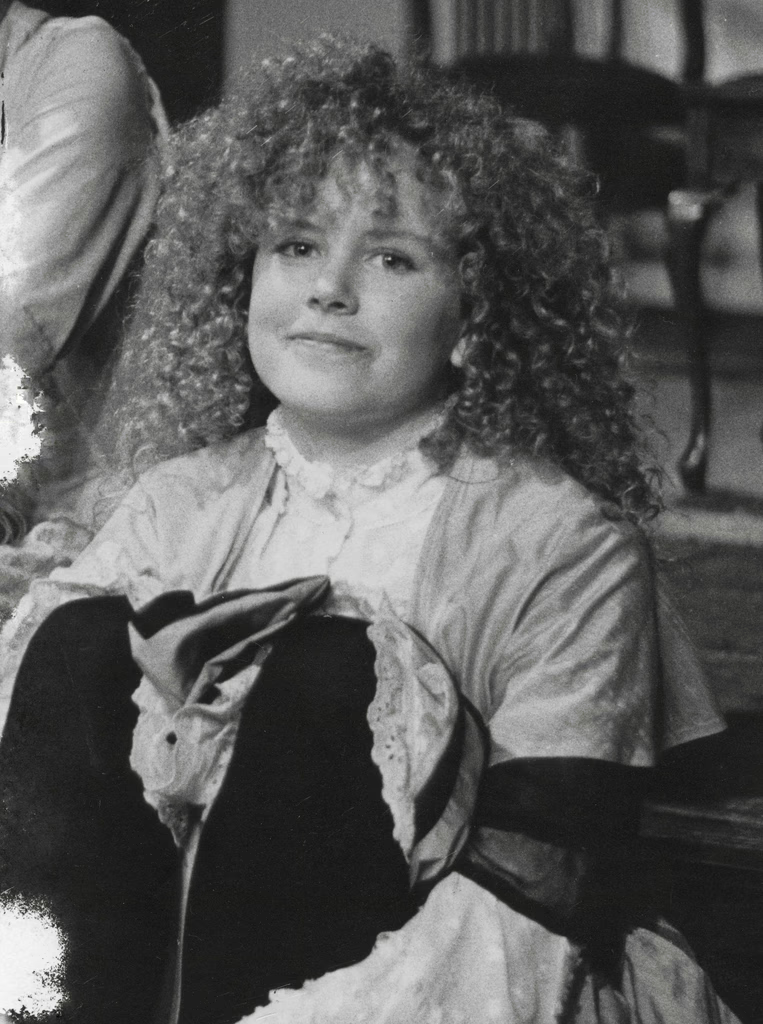
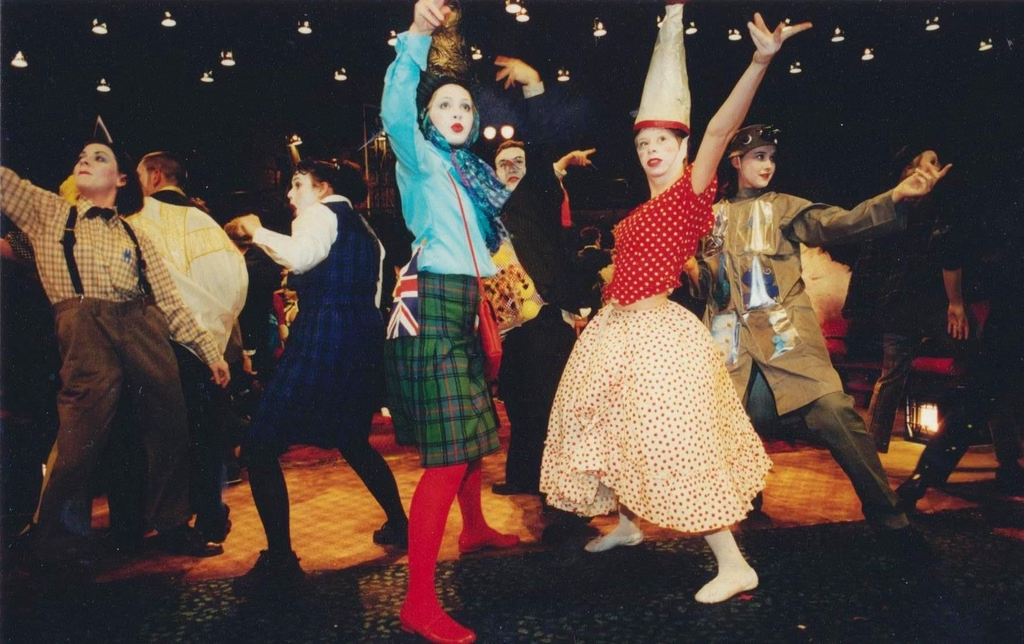
Championing the voices of young people and staging the stories they want to see is not at the top of everyone’s agenda. However, it’s what the Australian Theatre for Young People (ATYP) have been doing best for over 60 years. For good reason, they are known as the incubator of Aussie talent, as their alumni regularly find themselves becoming household names (yes, Nicole Kidman, Rebel Wilson, and Baz Luhrmann are on the list) or giving back to their communities in other ways.

Having been lucky enough myself to be a part of a flagship production and of their long-running National Studio development program for playwrights, I was curious to look back into this incubator and see what golden eggs I could find. 

Pressing, too, for any not-for-profit organisation in the creative arts, is the matter of funding and engagement. If engaging alumni could guarantee this organisation the security of future youth storytelling, while also reigniting the memories of theatremakers past and present, then this project hopes to deliver just that. So, reconnecting with my former stage alma mater felt natural for History Beyond the Classroom, which requires us to step out of our ivory tower and become public historians for a community organisation of our choice. Luckily for me, ATYP also has a resident archivist, Judith Seeff, who has been building out a vast and detailed archive since 2003, and who also has a wealth of working-history wisdom! 

Staring at the shelves lined with document boxes, not to mention their large off-site storehouse, you get a feel for the countless productions, workshops, and festivals that have platformed the voices of young people over the decades. Despite this far-reaching impact, though, live theatre has always faced ongoing financial pressure, especially within today’s cost-of-living crisis. For the consumer in this environment, going to the theatre with ever-increasing ticket prices becomes a big-ticket spend and highly discretionary item, and thus, one of the first to go. For the theatres, however, it is not any easier, from the on-stage cost of cast, creatives, and set, to the unseen costs of crew, venue hire, insurance, storage, transport, and marketing, to name a few. In 2025, for example, Sydney Theatre Company (STC) made $28.8m in revenue yet still had an operational deficit of $8.8m. One-off funding and increased fundraising ultimately helped turn this around. Similarly, Bell Shakespeare’s expenses of around ~$13m grew faster year-over-year than their income of around ~$12m. 

ATYP have been making stories for young people, by young people, since 1963.

So, if Aussie theatre heavyweights such as STC and Bell Shakespeare struggle to survive on ticket sales alone, how can we ensure the flourishing of developmental spaces like youth theatre, which are more vulnerable to funding cuts? This is where my public history project finds itself. By tracing the tangible impact over the decades, as materialised by ATYP’s alumni’s ongoing success or contributions to the community, I hope to prove their undeniable place in the Australian arts ecosystem. 

Steel City – The Illawarra Historical Society

For my project, I have chosen to work with the Illawarra Historical Society. The IHS is a volunteer-run community organisation that “endeavours to facilitate access to information on history and heritage topics related to the City of Wollongong local government area”. The Illawarra region is centred on the industrial port city of Wollongong, but stretches from the Royal National Park in the north to the Shoalhaven in the south, across several LGAs not covered by the IHS’ mission statement. 

The Society publishes written works relating to the history of Wollongong and the Illawarra, which are available for purchase at the Illawarra Museum or by correspondence. These cover a broad range of topics, from “Scandal, Slander and Interfering with our Neighbours” to “Railways of West Dapto”. I believe that the variety of topics in these publications, and the otherwise insignificant subjects they cover, are a testament to the value of local historical groups such as the IHS. The fact that these stories have an opportunity to be told – even if they possess a niche appeal and might otherwise escape the attention of historians working in the Academy – is important. Where else could someone find a history of the Railways of West Dapto, and who knows what future researcher will be aided by this history existing? I also believe there is value in engaging people who mightn’t ordinarily be passionate about history with stories they are familiar with and can relate to.   

The Museum

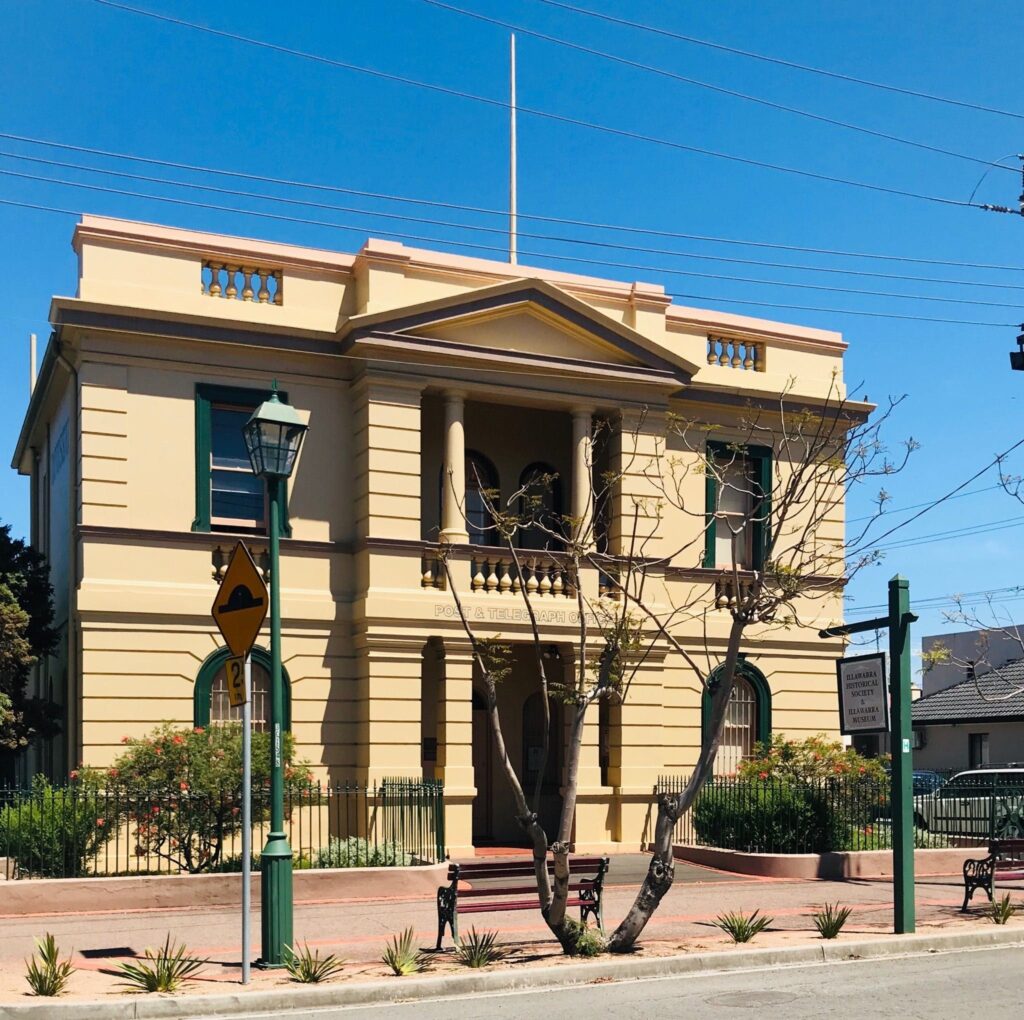
The IHS operates a small museum on Market Street in Wollongong’s CBD, which is only open to the public on Wednesdays and Sundays. The museum is housed in the city’s former Post Office, itself a heritage-listed building. The museum houses several permanent exhibits. These largely focus on the day-to-day life of past residents of the Illawarra, with guests able to view a reconstructed classroom, bedroom, and blacksmith’s workshop, among others. The museum also houses some of the Society’s collection of artefacts which aren’t on permanent display, although other material is stored off-site. 

The Illawarra Museum, Wollongong

Why the Illawarra Historical Society?

My hope for my project is to conduct research into the Mt Kembla Mine Disaster of July 31 1902 on behalf of the Society, as I grew up only minutes from the modern mine entrance above the small village of Mt Kembla. Coal mining has a long history in the region, with the Illawarra Escarpment housing multiple former or still operating mines whose products are used in steel production. These include sites at Mt Kembla, Mt Keira, and Russel Vale, among others. I credit my early exposure to the commemoration and retelling of the events of the Disaster as part of why I developed an interest in history as something worth pursuing at the tertiary level. My hope is that I can contribute to that commemoration in a way that is productive for the Illawarra Historical Society and for the community in which I grew up.

HSTY3811: In the Archives of USYD Women’s College

History is not simply about understanding the past, but also about examining how the past has been recorded, interpreted and remembered. This is the central focus of my current research project within the archives of The Women’s College at the University of Sydney, where I am investigating the origins and production of the College’s first comprehensive written history.

Background

Established by an Act of the New South Wales Parliament in 1889, The Women’s College opened its doors in 1892 as Australia’s first university residential college for women. Its establishment followed the University of Sydney’s decision in 1881 to admit women to undergraduate degrees on equal terms with men, representing an important development in Australian women’s access to higher education. Under its first Principal, Louisa Macdonald, the College initially accommodated just four resident students in a rented house in Glebe, before relocating to its permanent home on the University grounds in 1894. Since then, the College has played an important role in advancing women’s education, scholarship and leadership.

Project

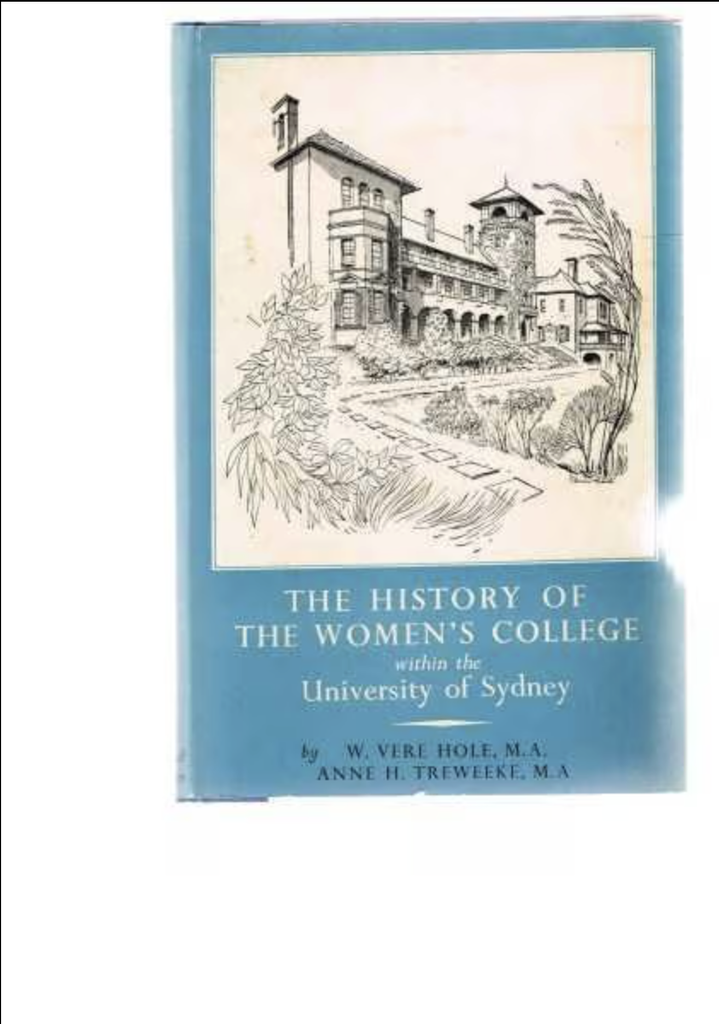
Relatively little academic attention has been devoted to documenting the College’s past. One particularly significant contribution is The History of the Women’s College within the University of Sydney, published in 1953 by two College alumnae, W. Vere Hole and Anne H. Treweeke. Covering the College’s development from its establishment in 1892 through to the mid-twentieth century, the book remains a foundational scholarly account of the institution’s early history.

My current project seeks to investigate the history behind this publication. Although the book provides an account of the College’s development, questions remain about the circumstances surrounding its creation. Questions I investigate include:

  • Why was the history written in the early 1950s?
  • Why were Hole and Treweeke selected to undertake the work?
  • Was the publication formally commissioned by the College, or did it emerge from the authors’ own interests and connections to the institution?

Equally important is understanding the historical research that informed the publication. Through examining archival material, I hope to identify the sources, correspondence and institutional records that contributed to the authors’ work. This involves considering not only what historical evidence was available to them, but also how they selected, interpreted and presented that evidence. Understanding their research methods may reveal how institutional histories were constructed during the mid-twentieth century, particularly when written by individuals with personal connections to the organisations they documented.

The project also raises broader questions about historical memory and the relationship between institutions and their own histories. As former residents, Hole and Treweeke occupied a distinctive position as both participants in, and historians of, the College’s story. Their perspectives may have shaped which individuals, events and achievements were emphasised, as well as what was omitted.

Ultimately, my research aims to contribute to the College’s understanding of an important publication within its archival collection. By uncovering how and why this history was produced, I hope to illuminate not only the College’s past, but also the processes through which that past has been preserved and remembered.

Faith in the Heart of the City: The St James’ Institute

In October 1819, Governor Macquarie laid the foundation stone for a new building that was at that time situated towards the edge of a small convict town. Designed by convict architect Francis Greenway as a courthouse, it was never finished as one. When it was already half-built, Commissioner Bigge baulked at the proposed cost for a grand cathedral proposed by Macquarie, and instead the building was converted to a church. When that building was consecrated as St James’ in 1824, it stood as the tallest structure of Sydney, with its spire guiding ships into the harbour. Two centuries later, it is now the oldest church building in Sydney, residing quietly at the heart of a global city that grown to tower around it.

Yet although the city may have grown around St James’, it still continues to return to it. For two centuries now Sydney has used the place as both a house of worship and repository of civic memory. Step inside the church and you find its walls are adorned with stories of the city’s growth and development, through the numerous marble tablets and brass plaques dedicated to governors, explorers, soldiers and parishioners.

Due to this, there are not too many buildings better positioned that St James to invite questions about how Sydney remembers its past. And for all of us history minded and inclined, we are very lucky that the St James’ Institute exists as an organisation that is willing and able to are for this memory. The Institute, established in 2007 and growing out of a spirituality centre founded by the Church in 1989 is the embodiment of the parish’s long-time commitment to education. The Institute describes itself as “a place of safety, diversity and dialogue in the heart of the city” and various events for people along all stages of their faith journey. 

To do this, the Institute welcomes numerous special guests including premier historians, poets, judges and theologians to lead lectures, discussions and seminars that cover an array of different topics. For example, this springs sessions are titled Shall All Really be Saved? and explores Christian universalism, whilst last year a series of talks titled Searching for the Real Secret River explored the Dyarubbin Project and the history of the Hawkesbury River.

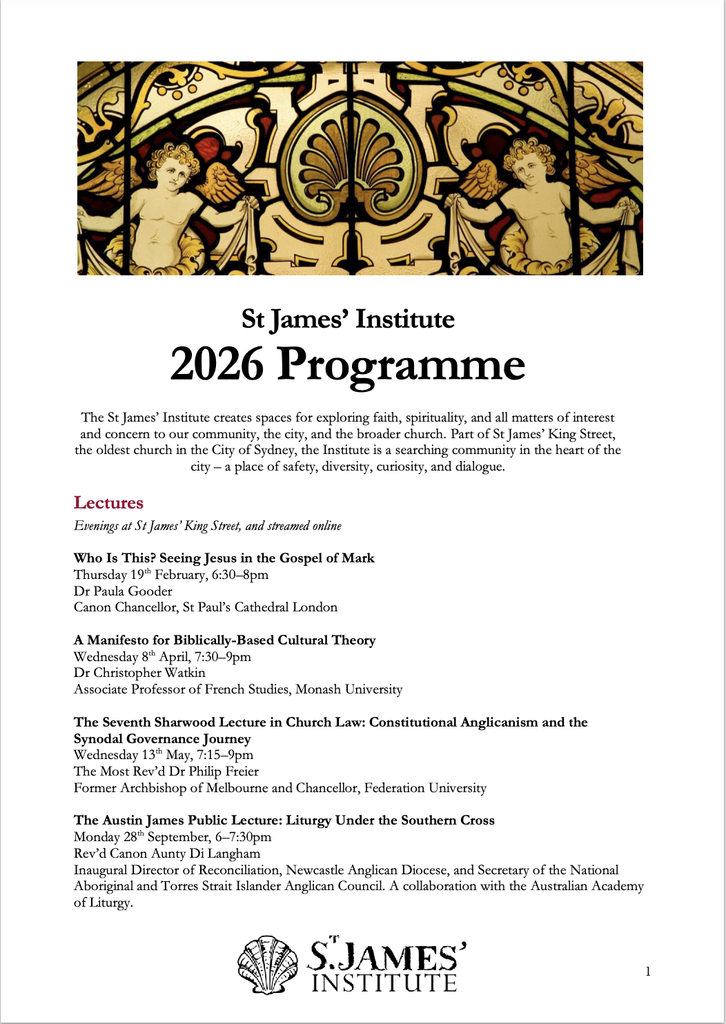
This is a screenshot of the 2026 Program released by the institute, which provides a list of all the events that take place throughout the year. This can be accessed on the St James’ Institute web page.

On top of this, the Institute also leads tours of the church for school and community groups, exploring all different angles such as art, history, music and spirituality.

Personally, what really interests me about the Institute is how rare it is. It is a religious institution whose story and development is directly connected with that of Sydney itself. Not only that, but it actively seeks to partake within that history, rather than be a passive holder of it. What the Institute uniquely does is transform the space that hosts liturgy’s and theological sermons into one of honest and frank discussions of Sydney’s past and the churches place within it.

It is from this foundation that my project begins. Titled “What Mean Ye by These Stones?”, my plan is to create a walking tour of the churches memorials that asks who or what exactly has been remembered by the Church within a particular point in time, and who made the choice to commemorate.