
For my project, I have chosen to work with the Illawarra Historical Society. The IHS is a volunteer-run community organisation that “endeavours to facilitate access to information on history and heritage topics related to the City of Wollongong local government area”. The Illawarra region is centred on the industrial port city of Wollongong, but stretches from the Royal National Park in the north to the Shoalhaven in the south, across several LGAs not covered by the IHS’ mission statement.
The Society publishes written works relating to the history of Wollongong and the Illawarra, which are available for purchase at the Illawarra Museum or by correspondence. These cover a broad range of topics, from “Scandal, Slander and Interfering with our Neighbours” to “Railways of West Dapto”. I believe that the variety of topics in these publications, and the otherwise insignificant subjects they cover, are a testament to the value of local historical groups such as the IHS. The fact that these stories have an opportunity to be told – even if they possess a niche appeal and might otherwise escape the attention of historians working in the Academy – is important. Where else could someone find a history of the Railways of West Dapto, and who knows what future researcher will be aided by this history existing? I also believe there is value in engaging people who mightn’t ordinarily be passionate about history with stories they are familiar with and can relate to.
The Museum
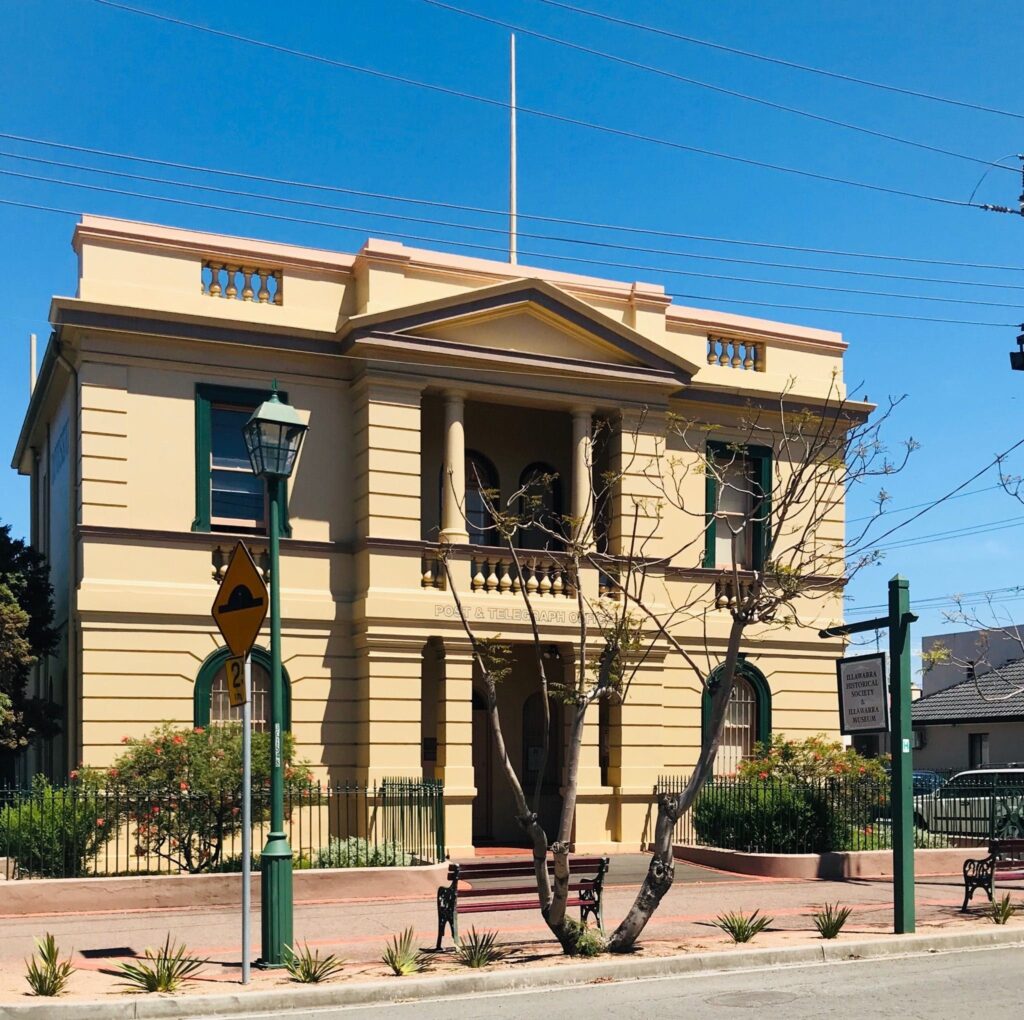
The IHS operates a small museum on Market Street in Wollongong’s CBD, which is only open to the public on Wednesdays and Sundays. The museum is housed in the city’s former Post Office, itself a heritage-listed building. The museum houses several permanent exhibits. These largely focus on the day-to-day life of past residents of the Illawarra, with guests able to view a reconstructed classroom, bedroom, and blacksmith’s workshop, among others. The museum also houses some of the Society’s collection of artefacts which aren’t on permanent display, although other material is stored off-site.
Why the Illawarra Historical Society?
My hope for my project is to conduct research into the Mt Kembla Mine Disaster of July 31 1902 on behalf of the Society, as I grew up only minutes from the modern mine entrance above the small village of Mt Kembla. Coal mining has a long history in the region, with the Illawarra Escarpment housing multiple former or still operating mines whose products are used in steel production. These include sites at Mt Kembla, Mt Keira, and Russel Vale, among others. I credit my early exposure to the commemoration and retelling of the events of the Disaster as part of why I developed an interest in history as something worth pursuing at the tertiary level. My hope is that I can contribute to that commemoration in a way that is productive for the Illawarra Historical Society and for the community in which I grew up.