
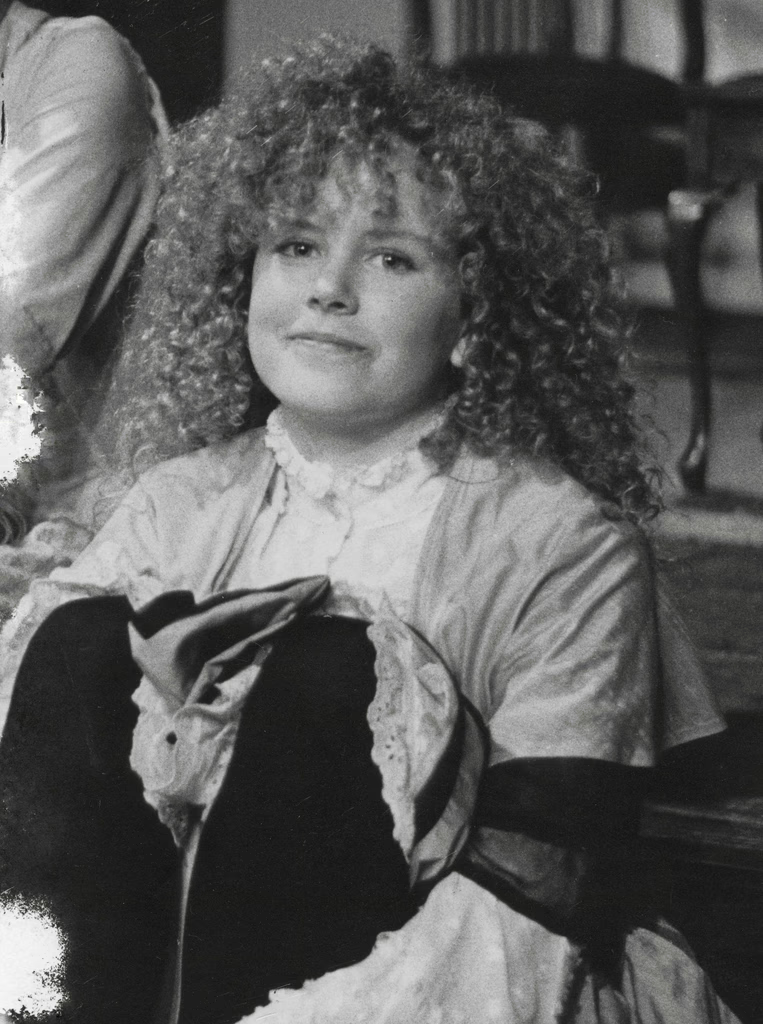
Championing the voices of young people and staging the stories they want to see is not at the top of everyone’s agenda. However, it’s what the Australian Theatre for Young People (ATYP) have been doing best for over 60 years. For good reason, they are known as the incubator of Aussie talent, as their alumni regularly find themselves becoming household names (yes, Nicole Kidman, Rebel Wilson, and Baz Luhrmann are on the list) or giving back to their communities in other ways.
Nicole Kidman, pictured above in 1984, was a part of ATYP’s 1984 production of Spring Awakening.
Having been lucky enough myself to be a part of a flagship production and of their long-running National Studio development program for playwrights, I was curious to look back into this incubator and see what golden eggs I could find.
Pressing, too, for any not-for-profit organisation in the creative arts, is the matter of funding and engagement. If engaging alumni could guarantee this organisation the security of future youth storytelling, while also reigniting the memories of theatremakers past and present, then this project hopes to deliver just that. So, reconnecting with my former stage alma mater felt natural for History Beyond the Classroom, which requires us to step out of our ivory tower and become public historians for a community organisation of our choice. Luckily for me, ATYP also has a resident archivist, Judith Seeff, who has been building out a vast and detailed archive since 2003, and who also has a wealth of working-history wisdom!
Staring at the shelves lined with document boxes, not to mention their large off-site storehouse, you get a feel for the countless productions, workshops, and festivals that have platformed the voices of young people over the decades. Despite this far-reaching impact, though, live theatre has always faced ongoing financial pressure, especially within today’s cost-of-living crisis. For the consumer in this environment, going to the theatre with ever-increasing ticket prices becomes a big-ticket spend and highly discretionary item, and thus, one of the first to go. For the theatres, however, it is not any easier, from the on-stage cost of cast, creatives, and set, to the unseen costs of crew, venue hire, insurance, storage, transport, and marketing, to name a few. In 2025, for example, Sydney Theatre Company (STC) made $28.8m in revenue yet still had an operational deficit of $8.8m. One-off funding and increased fundraising ultimately helped turn this around. Similarly, Bell Shakespeare’s expenses of around ~$13m grew faster year-over-year than their income of around ~$12m.
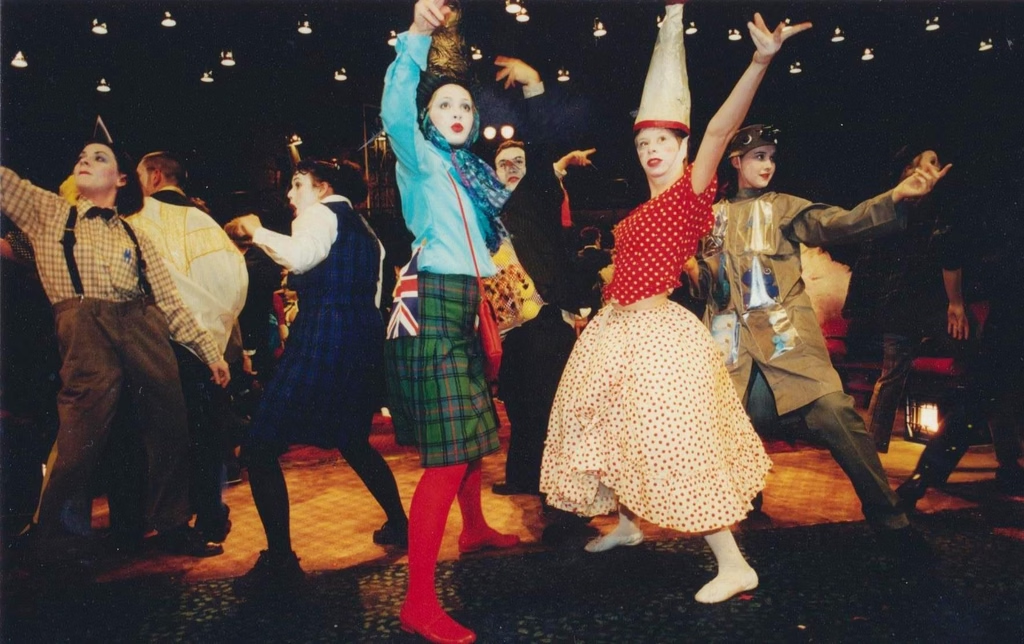
So, if Aussie theatre heavyweights such as STC and Bell Shakespeare struggle to survive on ticket sales alone, how can we ensure the flourishing of developmental spaces like youth theatre, which are more vulnerable to funding cuts? This is where my public history project finds itself. By tracing the tangible impact over the decades, as materialised by ATYP’s alumni’s ongoing success or contributions to the community, I hope to prove their undeniable place in the Australian arts ecosystem.