Camden Museum: A Small Rural Museum With Many Stories to Tell

As a history student, it is a little sad when I say that I know very little about the history of the place I call home. Swept up in the usual university history subjects of empires, global connections and cultural movements, I never found the time to appreciate my own history. So why not knock out a unit and some research of personal interest in one go by taking HSTY3811: History Beyond the Classroom. However, this blog is not solely about me, so I’d like to enlighten you, my reader, on quite the intriguing institution that I will be working with for this class.

I reached out to Camden Museum, my local museum, for my public history project. I had been there once as a child, not thinking much of it and speeding through (it was a hot day and I was probably eager to claim that ice cream my parents had promised), equating it more to a collection of objects my grandparents might have stashed away somewhere for sentimental purposes. But therein lies its charm. Camden Museum uses its significant collection of over 4000 objects to tell the story of the everyday lives of the people who lived and worked in this area, spanning several cultures and vast generations. This object-based focus brings to light the importance of the mundane and hidden histories, including but not limited to First Nations and women.
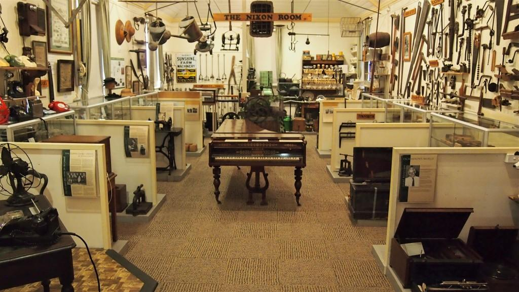
The Nixon Room, Camden Museum.
Image from Museums and Galleries NSW, https://mgnsw.org.au/organisations/camden-museum/

The museum is situated in the old School of Arts and Municipal Council building on John Street, Camden, adjacent to Camden Library, incredibly fitting for a place of research, and just to top it all off, Camden Museum is in partnership with Camden Area Family History Society, so there are a lot of interesting rabbit holes you can get yourself stuck into without ever having to leave the building.

The museum itself is run by the Camden Historical Society, a knowledgeable and enthusiastic bunch of people from all walks of life. Although I’ve expressed how tempting it is to hide away in the myriad of artifacts, books and photos, somehow the Camden Historical Society volunteers do find the strength to relinquish the desire to stay and go out and actively engage with the community. They provide educational programs, participate in community events and publish the Camden Journal, which expands on intangible topics and the community at large. Their community involvement works to bridge the gap between local history and the people of Camden.
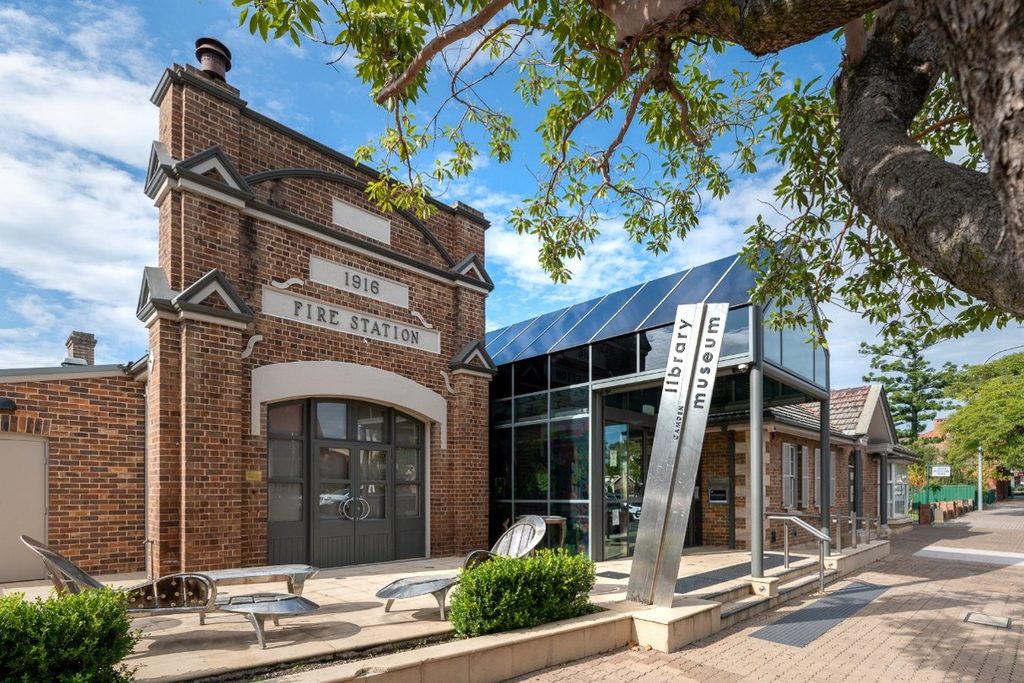
Camden Museum and Library, John Street, Camden.
Image from Museums and Galleries of NSW, https://mgnsw.org.au/organisations/camden-museum/

If you ever have the great pleasure of meeting these people as I have, be prepared for some seriously engaging conversations on whatever topic floats your boat. This society nurtures everybody’s interests, no matter how obscure, including my own, which now leads me to a sneak peek of my project with them.

I adore historical clothing, costume history and reproduction sewing and boy, did they let me indulge that. Camden Museum houses many items of clothing, including a blazer that belonged to Elizabeth ‘Liz’ Kernohan from the University of Sydney (I thought this was VERY cool) and a magnificent wedding dress from 1899 that has been in the collection since Camden Museum’s beginning in the 1970s. The latter of which I have gotten my grubby little hands on (do not come for me; I have not actually touched the dress in question yet, and if I ever do, I promise my hands will be freshly washed) and will be producing an article about it for publication in the Camden Journal, which you, my dear reader, will just have to wait to read, and I promise you it will be a gripping one.
Behind the Camera: Documenting the History of History Teaching

For just one second, the room feels strangely quiet. My cameras are all set up, I grip tightly onto the printed questions sitting on my lap and my interviewee is waiting. Two weeks have gone by in the blink of an eye and here I am, ready to ask thoughtful questions about history teaching, the organisation and the experiences of those who have been part of it. I press record. I take a deep breath.

3…  ❀

   ↓

2…  ✿

   ↓

1…  ❁

   ↓

This is where my HSTY3811 project commences.

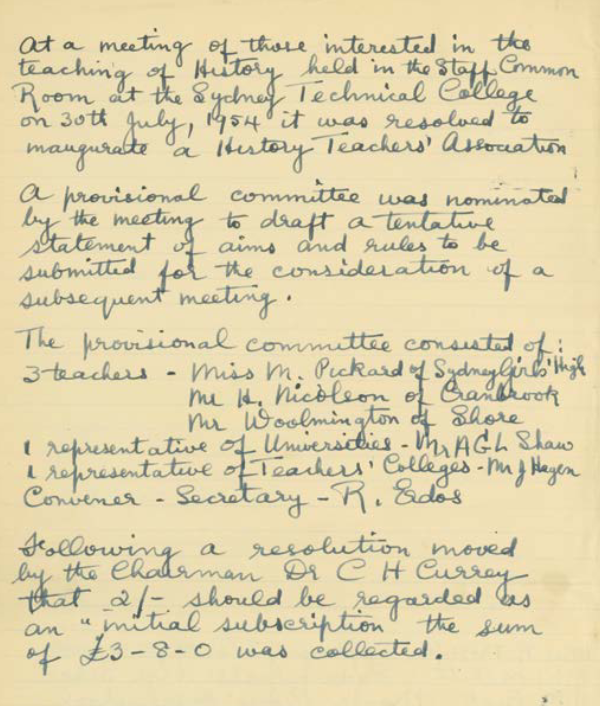
For my project, I am working with the History Teacher’s Association of NSW (HTANSW), an organisation that was established in 1954 by Renée Fauvette Erdos.After twelve years in state schools, Renée Erdos became Sydney Technical College’s first Head Teacher of History in 1948 and, finding no dedicated forum for History teachers, set out to create one. Over the many years and decades the organisation has promoted the teaching of history and brought together a community of history educators from all around the state. 

HTANSW’s early years were defined by advocacy. In 1954, the same year the association was founded, the Wyndham Committee Inquiry into secondary education was established, and HTANSW moved quickly to present a submission on behalf of History teachers. Its founding purpose was strikingly simple, “as teachers of History we want to meet and discuss the teaching of History and issues connected with our teaching of History” and that collegial ethos continues to shape everything it does today. 

Foundation document written by Renée Erdos, outlining the outcome of the first meeting of HTANSW on 30 July 1954. Retrieved from HTANSW Archives

As though I was a state librarian in search of archival material, I put on my gloves, flipped the pages with a tiny flickering bulb above my head and what caught my interest in HTANSW was not how the organisation concerned itself with the history curriculum. Instead, it was the community and the differing experiences of teachers who have first-hand insight into the changing nature of history education, curriculum, technology and Australian society across generations.

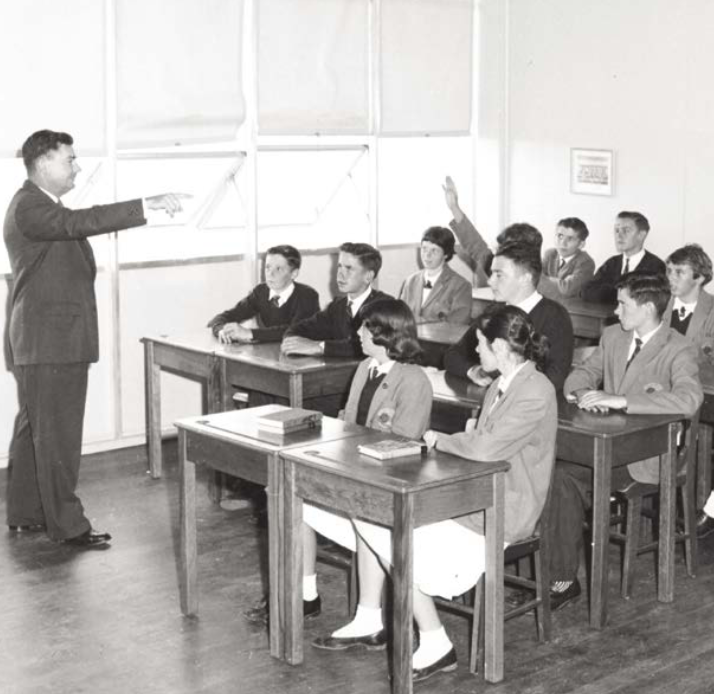
A classroom at the newly opened Ingleburn High School, early 1960s. Source: NSW Department of Education.

This raised one simple question: What does the history of history teaching look like when it is recounted by those who experienced it? 

Rather than solely relying on written records, I deliberately wanted my project to predominately focus on oral history interviews. For those memories, experiences, emotions and perspectives that came with being a part of HTANSW, I wanted to capture it all through the medium of film. Over the mid-semester break, I conducted my first two interviews with HTANSW Executive Officer, Jonathan Dallimore and President, Anne Gripton. 

I am also learning that turning these interviews into a documentary means more than simply putting conversations together. I want my final film/documentary to feel like a portrait of history teaching. If history is often preserved in the archives, HTANSW reminds us that it also lives in people. Jonathan mentioned to me early on that documenting these experiences was something the organisation had wanted to do for a long time. Knowing that has made the small red recording light more significant.

And so I sit behind the camera thinking to myself about what it means to record history. There is no dusty archive in front of me, just a camera, a list of questions and a person with a story to tell. 

Perhaps that is where history begins, not only in what we preserve but in what we remember.

Applejack Hospitality Company: a history of people

For my major project I am working with Applejack Hospitality company. (AJ) The company is 15 years old and has grown from a small 1 venue restaurant, closer to pub style, in Bondi, to now 12 vastly different venues and growing still.

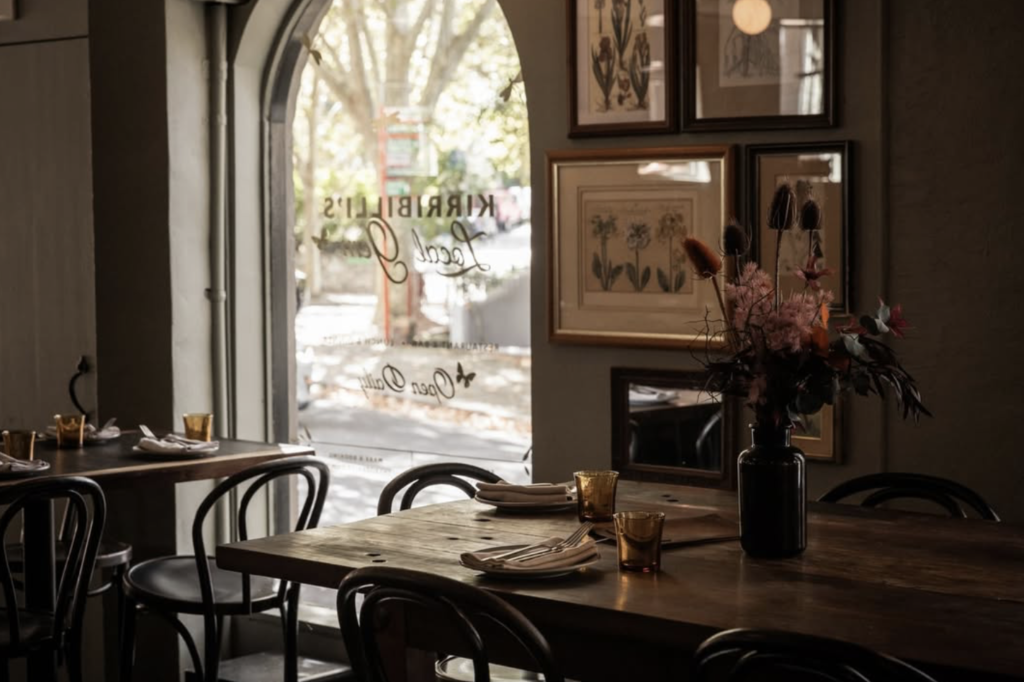
My interest in this area spiked as Mark Dunn’s seminar mentioned his work into the history of Wynyard escalators and the histories of Sydney’s pubs. This dive into public history couldn’t be surmised better than the places we frequent to eat and drink, Sydney’s hospitality industry. I picked Applejack as I have worked in their Kirribilli venue, The Botanist (TBK), for a couple years – which admittedly has given me ‘the in’ with many executives.

My project is taking shape as an oral history project, in the form of interviews with Applejack’s employees. By creating an online magazine, I can combine my creativity and utilize what I’m calling the ‘untraditional archive’. This is made up of design plans, old menus, and dockets, etc. The employee ranges range from floor and bar staff all the way to Head of Beverage, Marketing, HR, and the CEOS. I am aware of the daunting amount of work I have cut out for myself. I have highlighted 5 of the 16 interviewees that the magazine will highlight with one main venue to spotlight.

When examining the justification for a project like this, I fall to: How has Applejack grown and thrived within an industry that is constantly ebbing. Hospitality culture has its faults like any other industry and the long everchanging hours burns staff out quickly. That being said, I chose to believe and hypothesize that Applejack’s belief in people and a healthy culture is the reason they have been able to retain staff, grow, and thrive.

Further than the interviews, I am looking into scholarship and media around hospitality companies in Sydney. This helps to contextualize my project within larger hospitality industry. I have worked with other hospitality companies and though you inevitably find friends where you work, the culture everywhere else is vastly different from AJ’s. As I am focusing on TBK, I can investigate the history of the building: transition from a Gentlemen’s Club to an Italian restaurant to now a ‘local neighbourhood gem’.


One of the interviews I am quite excited by is my co-worker Charlotte and her parents. Charlotte grew up in Kirribilli and came to TBK for dinner on a semi-weekly basis and become a beloved TBK regular. Over the past ten years Charlotte has seen countless menus cycle through and now works as a waitress. Funnily enough, I met her years ago looking after her family and knew her parents regular wine order before putting two and two together. I am also
As I have scheduled about half of my interviews, I can see the project taking shape. After each, I am sharing a link to a shared folder for interviewees to search for ‘behind-the-scenes’ footage of the company which I am quite excited for.

Sporting Institutions as Historical Sites: Working with Ramsgate RSL Football Club

The organisation I’ll be working with is the football club I play for, Ramsgate RSL Football Club. They play in the suburb of Ramsgate in the St George area, and they have teams from U5’s all the way to O35S men’s and women’s teams. I have played for the club for the past three years, holding captaincy positions within my team, and I helped run the BBQ last year for the canteen; in that role, I built rapport with many board members, including the former and current club president. They are a club with a storied history, founded in 1959 by the local primary school and later, in 1984, merging with the local RSL club, and have grown ever since, with up to 40 teams in competitions at one time.  

The current badge of Ramsgate RSL Football Club

As an aspiring historian, I have always loved history from below, focusing on the community aspect of history and the people most affected by the events around them. One area that is most overlooked to me is sport. It isn’t as academic or impactful as other areas of history, or as credible in our society compared with museums or libraries, which hold our histories. Although it is less formal than these areas, I strive to show that sport and recreation institutions carry as much weight in telling a story as other institutions. I have previously assessed the importance of sports and recreation societies in the local community, specifically within migrant communities, which is the case for Ramsgate, as according to the 2021 census data there is a higher Greek population than there is Australian in the Ramsgate-Sans Souci area. This organisation is a cornerstone of the community and has become a place for all people to come together and continue making history.

I came forward with this project as someone as a member of this community, wanting to show off the proud history of our club and our community, and they have been very receptive and welcoming to the project so far and the idea of strengthening our already strong bond within the neighbourhood. Their club webpage has gaps in the history: they once had a physical display in the RSL, but it has since been removed, and the archives and materials have been stored safely in the RSL and around the suburb, in community members’ homes. There have been previous attempts to recreate a physical display and update the webpage, but these have stalled due to other priorities and a lack of time from club board members to complete them. Working together on this project kills three birds with one stone: creating a much-needed update to the club’s history, me conducting my project for my university course, and, most importantly, telling the story of this organisation that has been so influential in the community and how important is still important today. I’m looking forward to working with the club in the coming weeks to create something that showcases their amazing history and supports the organisation’s longevity.  

A Seed-Plot of History: Discovering the Seminary of the Good Shepherd

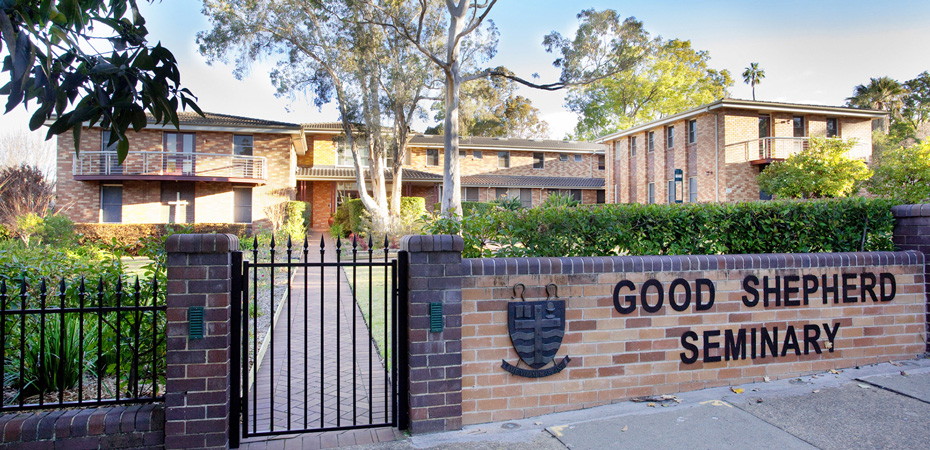
Derived from the Latin word seminarium, meaning “seed-plot”, a seminary is an institution where men discerning a vocation to the Catholic priesthood live, study, pray and receive their formation. Future priests are prepared academically, spiritually and pastorally before beginning their ministry in the Catholic Church. The Seminary of the Good Shepherd is Sydney’s seminary, located in Homebush and serving men preparing for priesthood in New South Wales and beyond.

Seminary of the Good Shepherd, Homebush – Seminary of the Good Shepherd  Homebush Sydney
The facade of the Good Shepherd Seminary in Homebush

Yet the seminary is more than a place of study and formation. It is also a community with its own history, memories, people and stories. After visiting the Seminary of the Good Shepherd, I began to see this history as a fascinating opportunity for a public-history project.

The Seminary of the Good Shepherd has been located in Homebush since 1996, but its history reaches much further back. Before moving to Homebush, Sydney’s seminarians were formed at St Patrick’s Seminary in Manly. The imposing sandstone building overlooking Manly Beach can still be seen today, although it now serves a very different purpose. My project will focus specifically on the history of the seminary in Homebush from its beginnings in the 1990s to the present, as much has already been written about St Patrick’s Seminary.

The former St Patrick’s Seminary (now the International College of Management) viewed from Manly Beach

When I first met the Rector, Rev. Fr Michael de Stoop, he gave me a tour of the Homebush seminary and the opportunity to look inside its small archive room. I was unsure what to expect, but among the material were journals dating back to the 1940s, including photographs from the former Manly seminary, as well as albums documenting the Homebush seminary from its establishment in 1996 to the present. There was also a register containing the names of seminarians who have studied at the institution. While looking through it, we even identified information that could potentially be updated.

Nevertheless, while photographs can show us what the seminary looked like and who was there, and registers can tell us who passed through the institution, these sources cannot necessarily tell us what it actually felt like to live there.

For that, we need memories and stories.

As part of the project, I will interview people who either studied or held significant posts at the Seminary of the Good Shepherd from its early years to the present. Their recollections will help explore what life was like within the seminary community and how the institution developed. These memories can then be considered alongside the archival material, allowing different forms of historical evidence to work together.

The timing is particularly appropriate, as the Seminary of the Good Shepherd will celebrate its 30th anniversary next year. This provides an opportunity to look back at how the institution has developed and the people who have contributed to its history.

My final project will build upon the seminary’s existing “History” webpage for their website (https://sgs.org.au/) by bringing together photographs, archival material, oral histories and academic literature. Rather than simply producing a timeline, I hope it can give viewers a better understanding of how the formation of future Catholic priests has changed over time in New South Wales.

fbi.radio’s early years: 1995-2003

Creating a community is consistent hard work and persistence. Those organisations that we love and cherish were not built in a day, a month, or even a year. They are seedlings of something special that we tend to over a long time that eventually blossom. 

I have chosen to work with fbi.radio (formerly known as FBi Radio) to archive and preserve the history of the station’s creation, up to August 2003 when the station went to air. fbi is Sydney’s dedicated station to arts, culture, and music in the city. This is carried through their commitment that 50% of all music played has to be Australian and half of that from Sydney. Since 2003, they have been major cultural arbiters and messengers in the city, platforming art that is not always pushed in mainstream musical circles, and that is consistently cutting edge. The station was first conceived in the mid 90s but didn’t actually receive a frequency until the early 2000s that allowed them to be heard on the FM airwaves. fbi had to contend with a number of independent community broadcasters to receive the 94.5 frequency, which led to the 90s and early 2000s of fbi being marked by a number of test broadcasts that presented a large slate of programs and music to attract a loyal audience.

I have been an active member and volunteer with fbi for over a year now and I have loved every moment of the experience. I have worked at the front desk, at social events, produced shows, and I am currently a presenter, and each of these experiences have broadened my horizons as to the immense communal effort that a community radio station is. This is why I am interested in partnering with fbi, because whilst a lot of credit is given to the front-facing nature of the radio in its major personalities, most people remain unaware of the sheer power that exists behind the scenes, which is perfectly captured by the fight for a frequency in the 1990s and 2000s. These organisations do not run simply on a prayer, they are the product of years of work and I believe that work deserves to be applauded in a public way that celebrates the endurance of community.

In doing my initial research, there was a lot of information that existed on fbi in their current iteration, but a lack of recorded history of the process that led to this current position. My project is a digital archive of materials and ephemera from this eight-year period of fbi’s history, presented alongside a written piece that compliments this history. Within it, I also seek to include the oral histories of key individuals I have interviewed about fbi to provide context to the ephemera I have collected. Through this manifestation of my project, I believe that I can produce something that is accessible to an increasingly online audience through its interactive appeal on a website, and a product that is celebratory of fbi’s achievements as well as the times in which it has struggled to stake its important claim in Sydney’s rich cultural tapestry.

This is a scan of an old promotional flyer, advertising a radio broadcasting course in partnership with The University of Sydney Student Union. It is unfortunately missing a year but will be investigating elements of it further to determine a date. 

The History Of Regional Arts NSW

Regional Arts NSW (RANSW) is celebrating 80 years since establishment as the oldest continuing creative arts organisation, providing incredible financial and administrative support to Regional Art Development Organisations (RADO) across NSW, to promote and platform regional art and artists. Despite their significant work and the millions they have provided in grants over these 80 years, social recognition and funding has remained low. When I spoke to operations and engagement manager, Beatrice Waller, who goes by “Bea,” she emphasised the organisation’s mission to cement themselves into the public by highlighting their history, advocacy and philanthropy with the goal of increasing donors and investors into RANSW. Bea explained how applicants for grants have increased as their social media page has started to gain traction but expressed disappointment with the fact that the organisation lacked the resources to keep up with the increasing demand. 

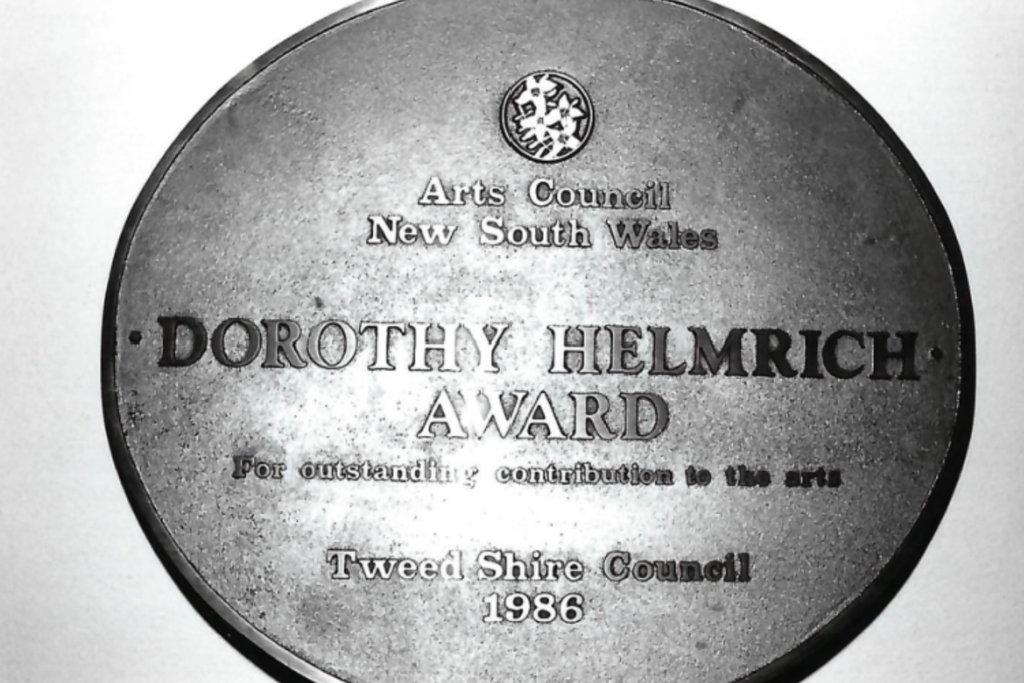
RANSW evolved from what was initially founded as “CEMA” or the “Council for the Encouragement of Music and Arts” in 1943. CEMA Australia was inspired by the British organisation of the same name, which was “formed to bring music to the people and to try and keep them sane with the arts during [the] madness of war.” This description comes from Dorothy Helmrich, the Australian singer and activist who established CEMA in Australia. After the war ended, CEMA would be renamed “The Arts Council of Australia.” In her publication of “A Five Years Record 1943-1947” Dorothy proudly recounts the council’s achievements, such as their very first subsidy of 600 pounds in 1946 and the various arts programs and performances they sponsored. Dorothy also expressed her activist beliefs that art “is not a luxury for the few but a necessity for all in a community which aims to make the best of life.” 

I see resonances of this activism within RANSW in their advocacy for the regional arts, which is what drew me into wanting to work with them. In contemporary Australia where the arts are demonstrably underfunded and overlooked, it is organisations like RANSW who keep the arts alive in our culture, at a time where although we’re not experiencing the “madness of war” we do experience the increasing madness of life. 

In preparation for their 80th anniversary, Bea has uncovered the organisation’s archives and requires assistance to sift through them to find the gems that showcase RANSW history and the transcendental nature of the organisation’s work. Her objective is to create a “History” section for their website (https://regionalartsnsw.com.au/) as well as an 80th edition magazine and presentation for a conference where many potential donors will confer. My objective is to utilise my investigative, interrogative, creative, argumentative and synthesis skills as a student historian to assist Bea and the tight-knit team at RANSW to achieve this. 

The final project will eventualise into a “History” section for the RANSW website, as well as a catalogue of digitised archives. Bea also reacted enthusiastically to my proposal about assembling a time capsule for the organisation to mark 80 years and manifest it as a good omen for 80 more. 

Image courtesy of Regional Art NSW archives. Digitised by Vanditta Kumar.