Creative Histories: Artists in the Archives

A panel discussion exploring practical ways in which artists and historians have collaborated on projects using archives, libraries and other historical research.

When: Thursday 14 May, 6 pm – 7 pm (AEDT)

Where: Nelson Meers Foundation Auditorium, Chau Chak Wing Museum

Cost: $5 General Admission
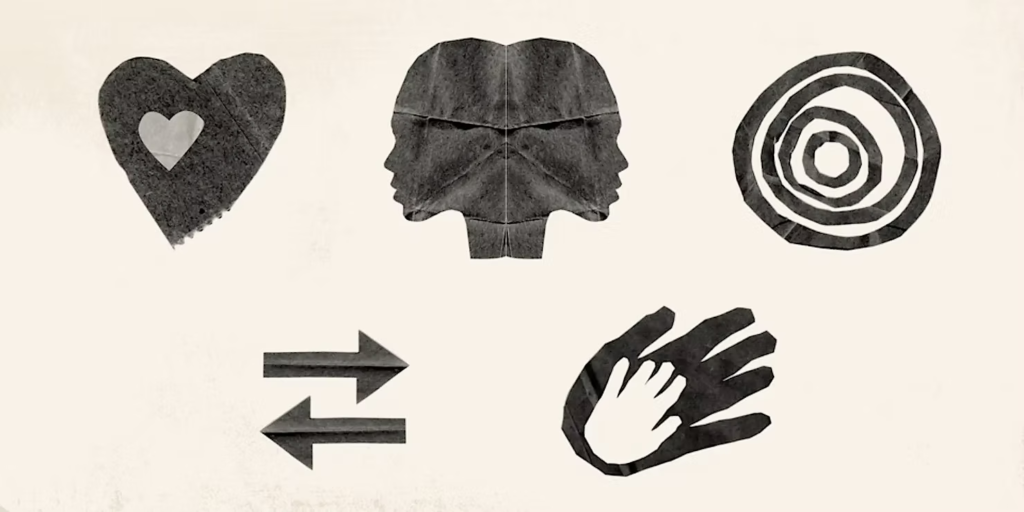
Artists can bring a new dynamic and creative approach to understanding historical enquiry. Historians, archivists and librarians can work with artists to find interesting new approaches to historical interpretation and to guide artists through the complexities of historical investigation.

This panel discussion co-presented with the Chau Chak Wing Museum, the Powerful Stories Network and the Discipline of History at the University of Sydney as part of the Biennale of Sydney 2026 program, will bring together historians and artists who have successfully explored historical legacies in fruitful collaboration and will explore what art can offer us in creative histories.

The discussion will be moderated by Professor Michael McDonnell, Chair of History, Faculty of Arts and Social Sciences, The University of Sydney.

Panellists:

Dr Lucia Sorbera is Associate Professor in Arab, Islamic and Middle East Studies at the University of Sydney, where she serves as Chair of the Discipline of Arabic Language and Cultures. Her research explores colonial and postcolonial histories of West Asia and North Africa, with a focus on women, gender, and sexuality. She is the author of Biography of a Revolution: The Feminist Roots of Human Rights in Egypt (University of California Press, 2025), and co-editor of Sex and Desire in Muslim Cultures (Bloomsbury, 2021) and Contending Legitimacy in World Politics (Taylor & Francis, 2018). Dr Sorbera is also active in public scholarship, publishing,  and curatorial practices, and regularly speaks at literary and film festivals

Alia Ardon is an emerging filmmaker and researcher with a deep interest in the plurality of historical narratives and ecological imperialism. She was a research resident at the Bouanani Archives in Rabat, where she led the beginning of her research on ecological imperialism, and the history of the industrialisation of gum trees in Morocco. Her film in development, ‘Kalitus’, which investigates the journey of eucalyptus to Morocco from so-called Australia, was awarded first prize at the USU Creative Awards 2024, and her Honours thesis on the topic was awarded the University Medal at the University of Sydney in 2026.

Among her notable works are her collaboration as a co-director on the film ‘Border Farce’ (2023) with Safdar Ahmed, commissioned by documenta-fifteen, and as the collaborating filmmaker for Deborah Kelly’s CREATION project. Her work has been shown in e-flux (New York City), MONAFOMA (Launceston), documenta-fifteen (Kassel), Think Tanger (Tanger), ZargaLab and Qissassna Festival (Marrakech), the Prague Quadrennial (Prague), and the State Library of NSW, Verge Gallery, Firstdraft, PACT Centre for Emerging Artists, and the SWANA Film Festival on Gadi Country, among others.

Ghasan Saaid is a Sydney‑based contemporary visual artist whose practice spans diverse artforms, including experimental visual media, mixed‑media works and concept‑driven installations. His work engages with broad social and emotional terrains such as identity, displacement and belonging within a wider exploration of human experience, memory and connection.

An award‑winning artist with exhibitions in Australia and internationally, Ghasan is recognised for a layered visual language that invites reflection and dialogue. As both an artist and curator, he develops collaborative projects that amplify diverse perspectives and foster cultural exchange.

Alongside his studio and curatorial practice, Ghasan contributes to community arts through his role at SSI, supporting creative programs for people from refugee and migrant backgrounds. He holds a Master’s in Studio Arts from the University of Sydney, complemented by further studies in arts and community services. 
Register Now

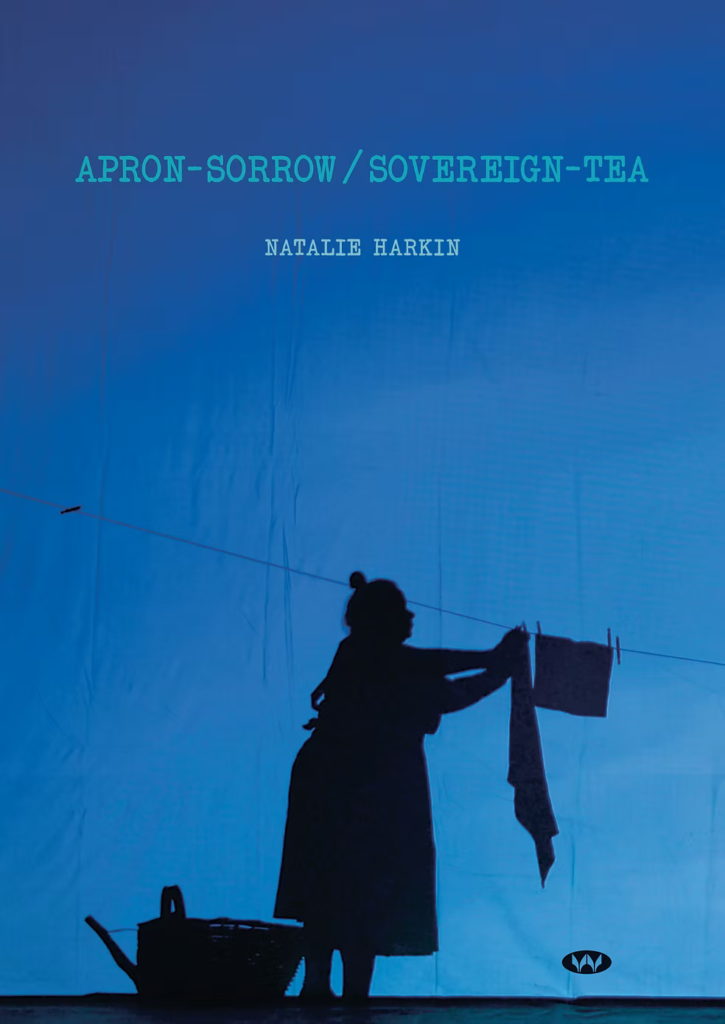
APRON-SORROW / SOVEREIGN-TEA: Living Legacy Archives and the Poetics of Reckoning

An Evening with Associate Professor Natalie Harkin (Narungga)

A Powerful Stories Network (PSN) event, co-sponsored with the Ritual and Performance Research Cluster at the Vere Gordon Childe Centre for the Study of Humanity Through Time

Wednesday May 13, 5:30-7:00 pm

Location – RD Watt Building, University of Sydney

Join Associate Professor Natalie Harkin (Narungga) – poet and Research Fellow with the Critical Indigenous Studies team as Flinders University to celebrate and discuss her Stella Prize nominated new book, Apron-Sorrow/Sovereign Tea. Dr. Harkin will relate her journey with the colonial archives, and specifically the State ‘Domestic Service’ records, and Archival-poetics as a research method and creative practice. She will illuminate the collaborative research with family and community to document memory stories and produce the creative work for the exhibition and book as a means to reveal and honour Aboriginal women’s domestic services stories in South Australia. Dr. Harkin’s work stands as a form of archival justice and the unfinished business of Stolen Wages in South Australia, and an urgent reminder that there’s no ‘truth telling’ without access to our archives.

Biography:

Associate Professor Natalie Harkin (Narungga) is a poet and Research Fellow with the Critical Indigenous Studies team at Flinders University. Her research centres on Aboriginal women’s domestic service and labour history and Indigenous Living-Legacy / Memory Story archiving innovations for our time. She is committed to archival justice and is a member of the inaugural State Records/State Library of South Australia’s Aboriginal Reference Group; the national Indigenous Archives Collective; the First Nations Working Party of the Australian Dictionary of Biography, ANU; and a Fellow of the Australia Academy of the Humanities. Her words have been installed and projected in mixed-media exhibitions, including a decade long creative-arts research collaboration with the Unbound Collective. She is widely published, and her manuscripts include Dirty Words (Cordite Books, 2015), Archival-poetics (Vagabond Press, 2019), and APRON-SORROW / SOVEREIGN-TEA (Wakefield Press, 2025).

REGISTRATION

History on Wednesday Seminar Series

Faculty of Arts and Social Sciences
School of Humanities 

History at Sydney
2026 | Semester 1 seminar series

The University of Sydney kemper-image

History on Wednesday

Semester 1 | 2026 
12.10pm – 1.30pm | Vere Gordon Childe Centre (F09) and Zoom

Mar 4  | Dr Gaelle Bosseman (University of Rennes 2) The ongoing presence of the Apocalypse in the Middle Ages: functions and uses of an end-of-the-world motif.

Mar 18 Dr Stephen Pascoe (UNSW)
Concessionary Imperialism and Its Discontents: Sketches for an Infrastructural History of Syria.

Mar 25Associate Prof. Jennifer Ferng (Sydney)Offshoring Architecture: Asylum’s Counter Archives. 

Apr 1  | Associate Prof. Toby Martin (Sydney) 
Songwriting as History

Apr 22 | Professor Laura Beers (American University)
“The Prostitution of Reproduction”: Feminist opposition to surrogacy from the 1970s to the present day.

May 6 | Associate Prof. David Smith (Sydney)Truth-telling, renaming and removing: the experience of American Universities.

May 20Dr. Marco Duranti (Sydney)
How Social Rights became Human Rights: Christian Democracy and the Making of the 1961 European Social Charter.

Zoom link to be sent with event reminder.Venue: Vere Gordon Childe Centre (F09)

Contact:
Please contact Niro Kandasamy or James Findlay for more information:
niro[email protected]
 or [email protected]

Seminar image: Unsplash     The University of Sydney

CFP: Broken Knowledge Trajectories


‘Past and Present’ Cluster of Vere Gordon Childe Centre

The University of Sydney

Friday 27 February 2026, 9-4pm

Org.: Dr Hélène Sirantoine (School of Humanities, The University of Sydney), Dr Gaëlle Bosseman (Tempora-Laboratoire de sciences historiques, Université Rennes 2)

The History of knowledge is a long-established field of scholarly inquiry. In recent years, however, increasing attention has been paid to investigate mechanisms, intermediaries and pathways for the transmission and transfer of information, wisdom, experience or expertise across historical societies, groups or individuals. At the heart of such research, the concept of circulation allows to examine both the trajectories of knowledge in its various contexts, and the cultural, scientific and intellectual choices made by given environments or societies. Yet, scholars frequently encounter a lack of direct evidence necessary to reconstruct these pathways and networks of knowledge transmission, therefore hypothesised through circumstantial indicators, but not fully documented. What to do when confronted with such gaps in the evidence? How to deal with broken chains of transmission? This workshop seeks to precisely reflect on these questions. By focusing on the methodological challenges posed by broken or elusive routes of knowledge transmission, it aims to foster dialogue among specialists from diverse backgrounds and expertise in order to compare approaches and questions.

This investigation was initiated by Dr Gaëlle Bosseman and Dr Hélène Sirantoine on the specific milieux of the Middle Ages which they specialise on. However, the methodological problem at the centre of this inquiry transcends temporal, geographical and disciplinary boundaries. By inviting collaborative reflection among scholars from a range of disciplines, this workshop aims to enrich approaches to the complexities of knowledge circulation in an interdisciplinary, trans-period and trans-cultural perspective. 

We welcome propositions for 15-minute presentations focused on a specific example or case-study to be shared with the reflection group. If interested, please send an abstract (150-250 words) by Friday 19 December to [email protected] and [email protected]

Note that this is planned as a hybrid event (Sydney time), to allow the participation of overseas colleagues. While we favour in-person participation for local colleagues, please let us know if this is not an option for you.

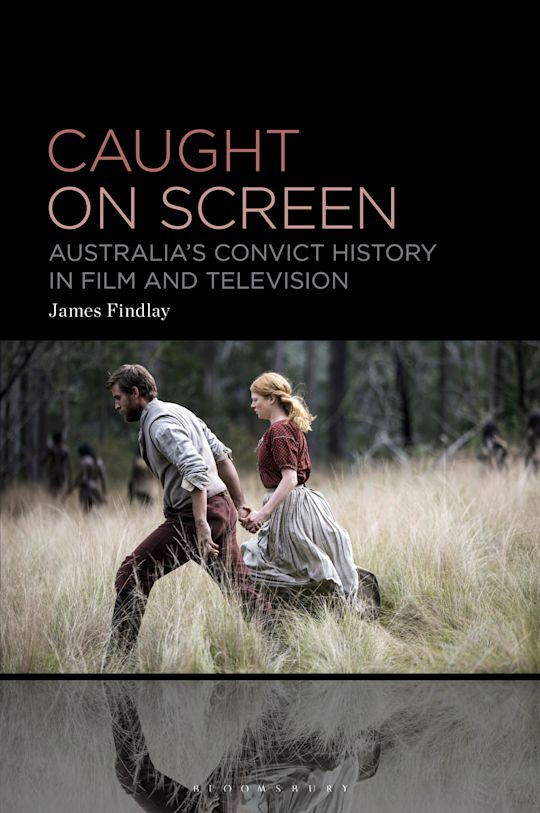
Book Launch: Caught on Screen: Australia’s Convict History in Film and Television

Author James Findlay in Conversation with Professor Michelle Arrow

From innocent criminals to radical revolutionaries, feisty feminists to manly pioneers, egalitarian settlers to violent invaders, Caught on Screen shows how over successive generations the shape-shifting convict emerged on screen as a potent historical symbol.

Join us for a night of conversation and celebration as we launch James Findlay’s new book: Caught on Screen, with our special guest, Professor Michelle Arrow.

Thursday, 6 Nov, 5:30pm for a 6 pm start – 8pm AEDT

Vere Gordon Childe Centre Boardroom, Camperdown NSW, Australia

Register Now!

Convicts loom large in Australian history.As transported criminals and the first European settlers, they have shackled the nation to a curious and contested origin story. Historians were largely silent on their exploits until the second half of the twentieth century, but before then a tradition of convict representation on screen appeared with the rise of cinema, taking hold of the popular imagination. From silent films to more recent television series, screen culture has elevated the convict experience to become a key historical narrative through which filmmakers and audiences have repeatedly reframed and challenged an understanding of Australia’s colonial past. Caught on Screen traverses this history of convict representation for the first time.

Through detailed archival research into their production and reception, the book explores engaging case studies produced in Australia and internationally, including the work of Douglas Sirk, Alfred Hitchcock and Jennifer Kent. It illuminates the fact that the convict as historical symbol is one that intersected with, and helped to direct, major debates about nationalism, the legacies of colonisation, Aboriginal dispossession and the origins and character of Australian society.

James Findlay:

James Findlay is lecturer in the discipline of history where he teaches Australian history and researches historical film and television studies, convict history, Australian popular culture, and public history. He has held the Australian Film Institute Research Collection Fellowship and prior to his appointment was the Archival Project Manager for the Society of Australian Genealogists. Before becoming a historian, he worked extensively in film and television production, mostly in the field of documentary, for companies including Beyond Television, Screenworld, and Film Australia.

Michelle Arrow:

Michelle Arrow is professor in modern history at Macquarie University. She is the author of several books, including The Seventies: The Personal, the Political and the Making of Modern Australia (2019), which was awarded the 2020 Ernest Scott Prize for history, and the edited collection Women and Whitlam: Revisiting the Revolution (2023). She is currently working on a biography of the Australian writer and broadcaster Anne Deveson. Her most recent book is Personal Politics: Sexuality, Gender and the Remaking of Citizenship in Australia, co-authored with Leigh Boucher, Barbara Baird and Robert Reynolds (Monash University Publishing, 2024). 

Register

History on Wednesday Seminar Series | Semester 2 2025

Faculty of Arts and Social Sciences
School of Humanities 
History at Sydney2025 | Semester 2 seminar series The University of Sydney
kemper-image
History on Wednesday
Semester 2 | 2025 


12.10pm – 1.30pm | Vere Gordon Childe Centre (F09) and Zoom Aug 20  | Dr Ekaterina Heath (Sydney) 
Napoleon in Australia: Collections, Memory, and Living Monuments.

Aug 27 | Powerful Stories Network Event – Prof. Victoria Haskins (Newcastle)
Burning the House Down: Arson and Aboriginal Resistance in Settler Colonial Australia

Sept 10 | Powerful Stories Network Event –
Dr Rebecca Sheehan (Sydney)
A Mixed Inheritance: Ancestral Callings, Archival Hauntings, and the Legacy of Miscegenation in Nineteenth Century Sarawak

Sept 24  | Associate Prof. Leigh Boucher (Macquarie) ‘Community through catastrophe’: The HIV/AIDs crisis in Darlinghurst.

Oct 22 | Presented in affiliation with the Medieval and Early Modern Collabroative Network – Chet Van Duzer (Rochester)
Mapping the Unknown: Cartographers’ Strategies for Navigating Uncertainty

Nov 5 | Powerful Stories Network Event –
Prof. Kat Ellinghaus (La Trobe) & Prof. Barry Judd (Melbourne)
Ngura Ninti (‘Knowing Home’): A methodological approach for ethically based truth telling in Australian history writing. Zoom link to be sent with event reminder.

Venue: Vere Gordon Childe Centre (F09)

Contact:
Please contact Niro Kandasamy or James Findlay for more information:
niro[email protected]
 or [email protected]

Seminar image: Unsplash
    The University of Sydney Keep in touch Facebook Twitter Instagram LinkedIn YouTube Copyright © 2021 The University of Sydney, NSW 2006 Australia
Phone +61 2 9351 2222 ABN 15 211 513 464 CRICOS Number: 00026A

Please add [email protected] to your address book or senders safe list to make sure you continue to see our emails in the future.
Manage and Opt out using TrueRemove®
Got this as a forward? Sign up to receive our future emails.
View this email online.
Disclaimer | Privacy statement | University of Sydney

Dr. Roberto Chauca wins a 2025 Humanities Travelling Fellowship

Dr. Roberto Chauca was one of nine early-career researchers who were awarded Travelling Fellowships by the Australian Academy of the Humanities to conduct projects addressing issues of national and international significance, such as the impact of political mis/disinformation on social platforms, historical attitudes towards women’s work & how Pacific communities respond to climate interventions.

Humanities Travelling Fellowships enable early-career researchers to undertake research overseas, where they may access materials otherwise inaccessible, connect with international organisations, researchers and forge new networks.

For a list of all recipients and their project, click the link above.

Unearthing Indigenous Voices from Early Modern Amazonia 1560-1561 

Across 1560 and 1561, Spanish captains Pedro de Ursua and Lope de Aguirre charted the second European voyage along the Amazon River. Dr Chauca Tapia’s project aims to unearth, for the first time, a complete edition of two anonymous accounts of that expedition—which alludes to a search for the mythical city of El Dorado, and the murder of Ursua.

Under the Fellowship, Dr Chauca will travel to Madrid, Spain, to access documents at the National Library of Spain and the Royal Academy of History, and develop a monograph-length manuscript for publication.

“This fellowship will provide me with the opportunity to challenge the conventional interpretation of Spanish explorations along the Amazon River in the early modern period, generally portrayed as events of heroism and discovery. Instead, the documents I seek to transcribe and translate from the Madrid archives will reinforce my research profile as a historian who has sought to position Indigenous knowledge as the foundation that enabled Europeans to learn about the human and natural landscapes of the Americas.”

You can find more information here about Dr Roberto Chauca

2025 Wood Memorial History Lecture

ree


Creative Histories: A Conversation

With Shauna Bostock, Andre Dao, Katerina Teaiwa, and Sophie Loy-Wilson

 Wed, 27 Aug, 5:30pm – 7:30pm AEST 

Chau Chak Wing Museum

Camperdown NSW, Australia

In this Wood Memorial Lecture/History Now event, Dr. Sophie Loy-Wilson from the discipline of History at the University of Sydney will sit down with three extraordinary scholars who have drawn on lived experiences and different methodologies to produce creative histories that have made an impact on how we think about and do history. Shauna Bostock, André Dao, and Katerina Teaiwa will discuss their past and future projects, and challenge us to imagine new ways of approaching, practicing and presenting history in Australia today.  

 The Wood Memorial Lecture is funded by a generous endowment to the discipline of History in the School of Humanities to facilitate a public Lecture in Australian History.

Please join us for a reception following the lecture.

This event is in the 2025 History Now series. History Now is presented by the History Council of NSW in conjunction with the Chau Chak Wing Museum and the Vere Gordon Childe Centre and the Powerful Stories Network. History Now 2025 is supported by Create NSW.

ABOUT THE SPEAKERS:

Shauna Bostock is currently the Indigenous Australian Research Editor at the National Centre of Biography at ANU. A former primary school teacher, Shauna Bostock’s curiosity about her ancestors took her all the way to a PhD in Aboriginal history, which turned into a book entitled Reaching Through Time: Finding my family’s stories(Allen & Unwin). The book was awarded the NSW Community and Regional History Prize in 2024, and praised as a ‘compelling blend of Indigenous history, community history and the history of colonial settlement.’

ree

André Dao is an author and researcher from Naarm/Melbourne, Australia. His debut novel, Anam, won the Prime Minister’s Literary Award for Fiction, the NSW Premier’s Literary Award for New Writing, and was shortlisted for the Miles Franklin Literary Award and the Voss Literary Award. In 2024, he was named a Sydney Morning Herald Best Young Australian Novelist. André was awarded the 2024 Pascall Prize for Cultural Criticism for essays published in The Saturday Paper, Meanjin and Liminal. He is a postdoctoral fellow with the ARC Laureate Program in Global Corporations and International Law at Melbourne Law School, where is working on a history of how the computing company, IBM, travelled to the Global South.

ree

Katerina Teaiwa is Professor of Pacific Studies in the School of Culture, History and Language at the Australian National University. She is a scholar, artist, activist and nationally award-winning teacher of Banaban, I-Kiribati (Tabiteuean) and African American heritage born and raised in Fiji. Her exhibition “Dance Protest” is currently showing at the Chau Chak Wing Museum at the University of Sydney.

ree

Images: courtesy of Katerina Teaiwa

Register Now

History, Genocide and Gaza: A Conversation with Prof Daniel Blatman


Friday, 1 August 5-6pm 

RD Watt Building, Room 203

 Please join us for an informal conversation with Daniel Blatman, eminent scholar of Modern Jewish History and Holocaust Studies. Like other historians of the Holocaust, Blatman argues that Israel is currently committing a genocide in Gaza. “I have been engaged in researching the Holocaust for about 40 years,” he writes. “I never imagined in my worst nightmares that the Jewish state would bomb starving children to death”. What is the role of historical research in the context of the unfolding genocide? And what does this moment ask of us, as historians and other scholars? 

Our discussion will be organised around two of Prof Blatman’s recent pieces in Haaretz

“There’s No Auschwitz in Gaza. But It’s Still Genocide”

“Invoking Never Again in Israel, as More Children Die”

If you would like to attend the discussion, please come having read these two short articles and bring questions for Prof Blatman. Staff and students all welcome. 

Bio: Daniel Blatman is Professor of Modern Jewish history and Holocaust Studies. He has worked on the history of the Jewish labor movement in Eastern Europe, the Holocaust in Poland, and on Nazi annihilation policy at the end of World War II. His publications include: For our Freedom and Yours, The Jewish Labor Bund in Poland 1939–1945 (2003), Reportage from the Ghetto, The Jewish Underground Press in Warsaw Ghetto (2005), and The Death Marches, The Final Phase of Nazi Genocide (2011).

 Sponsored by the Powerful Stories Network, the Sydney Staff and Students Workshops on Anthropology, Research and Methods (SSSWARM), and the Discipline of Anthropology 

Contact: Michael Edwards, Discipline of Anthropology, [email protected]