
For my major project, I’ve chosen to work with The Dunera and Queen Mary Association. Members of this not-for-profit organisation do amazing work to preserve the memory of the Dunera Boys, and continue their legacy of education and community.
After the outbreak of World War II, Britain declared that all “enemy aliens” of the state were to be deported aboard the HMT Dunera and sent to various internment camps in Australia. By July 1940, over 2,000 men of Austrian and German descent (that resided in Britain at the time) found themselves in rural New South Wales and Victoria. Additionally, the RMS Queen Mary sailed 295 “enemy aliens” from Singapore (a British colony at the time). The gruelling, 57-day voyage subjected passengers to inhumane conditions beneath the ship where few saw sunlight before reaching Australia, and many experienced abuse and theft at the hands of British guards. They were interned in Hay and Orange (NSW), and in Tatura (VIC).
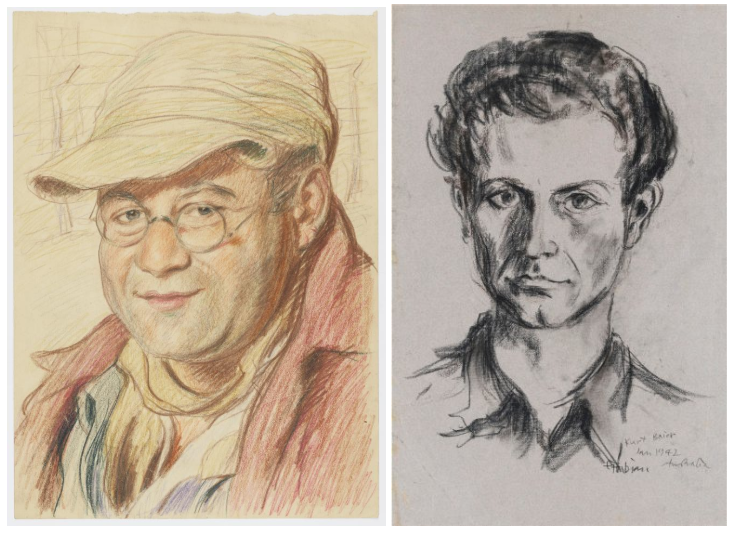
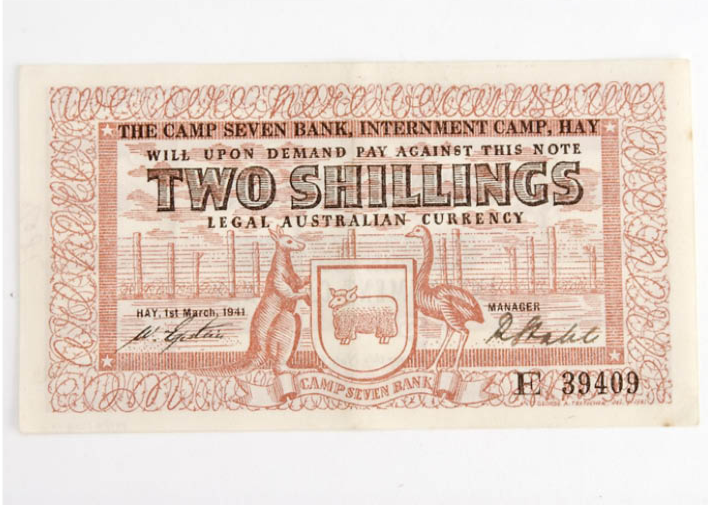
Many of these men would spend years of the war—years of their lives—stuck behind the barbed wire fences in drought-struck Australia, while war waged at home. These internment camps were flooded with some of Europe’s most colourful creatives and brightest academics. Dunera experts, Ken Inglis and Seumas Sparks have noted that “there is no one Dunera or Queen Mary story”. These camps became a mosaic of minds; where one could find artists, photographers, and academics of all walks of life. Composers re-wrote classic compositions from memory alongside their own original scores—to be performed for camp audiences (and sometimes guards) on a piano donated by a local church. Artists like Robert Hofmann and Erwin Fabian never stopped drawing (see above). Their works now serve as chronicles that document the many faces that passed through the camps; they capture isolation and, at times, helplessness that came with living in the internment camps. Despite the confinement, such a vibrant and lively group of men organised an active camp, with a “university”, an (aforementioned) orchestra, and even created a camp currency.
My great grandfather was a Dunera Boy himself. It altered his life completely, and he never would have met his future wife if not for the HMT Dunera. Although his dislike for this period of his life was always reflected in his reluctance to discuss it, when he did, he could always recall the smell of fresh fruit. Working in the camp’s vegetable garden and orchard as a fruit picker, he could still smell the scent of fresh oranges and peaches, straight off the tree, seventy years later.
Ironically, Mark Dunn’s talk on physical sites of public history got me thinking about how these camps don’t exist anymore (as many were demolished and/or now sit on private land). Their memory, for such a unique and specific period of Australian history, is incredibly intangible. It is their memories and their creations that now serve as public history, and breathe life into this history. Furthermore, after reading Darcy Campbell’s reflection on her HSTY3811 project, I knew I wanted to explore a topic that felt a bit more personal (and challenge my own knowledge of the Dunera). After deciding to reach out to this organisation and having a look at their current website, acting-President Michelle was very enthusiastic about producing a digitised public history of notable Dunera Boys. While the Dunera Boys are often collectively studied, their individual lives (both before and after internment) are less accessible to the public. My project would hold a space—a public platform—for the organisation to preserve individual histories on each of the Dunera Boys. It is a collaboration I am very proud of and work that I find immensely rewarding. While every Dunera Boy has passed, the association is led by children, grandchildren, and now great-grandchildren.