
The argument at the heart of my project is how the impact of Aussie youth theatre reaches far beyond the familiar stars on the big screens. This influence can be traced right across the national arts landscape and beyond, but sometimes it requires a spotlight. The Australian Theatre for Young People (ATYP), known as the incubator for this talent, boasts a remarkable alumni network. Through my project, I tracked and preserved a snapshot history of this to cement the significance of such an organisation.
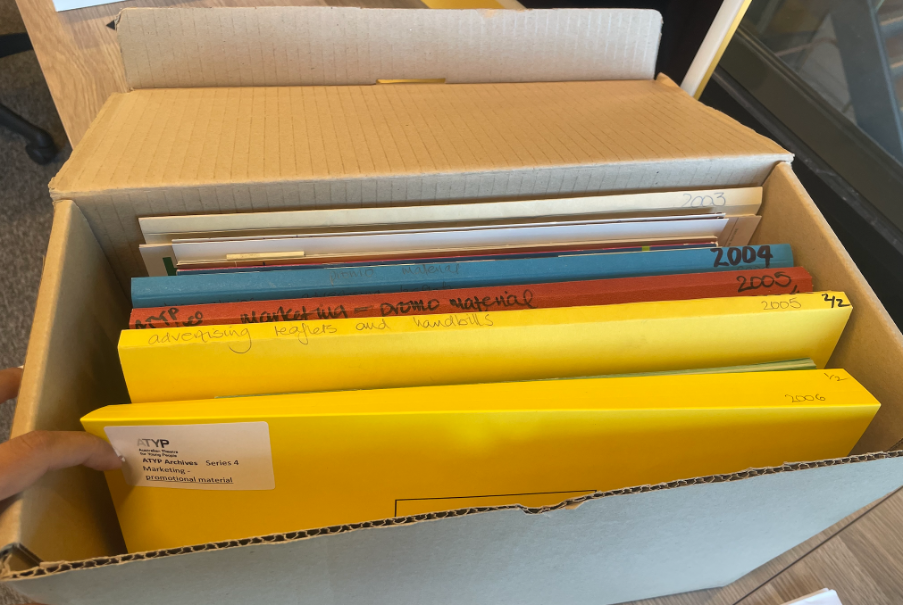
The research process involved sifting through stacks of physical archives and ephemera, from marketing material and programs to administrative files accessed with the help of resident archivist Judith Seeff. Looking for alumni in each archival document was the easy part. The difficulty was in knowing who to include in my database for future outreach programs. The familiar stars instantly jump from the pages, but what about the other names? Many creatives do not pass the sieve of time or fame yet go on to contribute very meaningfully to their respective fields. This required an active curation on my part of balancing showbiz heavyweights with working creatives, from Ed Kavalee to Jane Miskovic – once an avid ATYP workshop tutor and director, now a clinical psychologist with a focus on the creative and performing arts sectors. In this way, after compiling an initial broad list of around 60 names, I systematically cross-checked my findings with Judith’s existing database to filter and eliminate entries. What I found overwhelmingly to be true is that an institution’s legacy is defined by the compounding impact of all its participants.
While the final deliverable is just an Excel file of alumni’s current contact details and roles, the project’s creativity lies in its curation. Within the Excel file, I designed specific data columns that bridge the past and present. Historical categories such as ‘Source Type’ and ‘Years active’ preserve archival context, while modern outreach fields of ‘Current role’ and ‘LinkedIn URL’ translate it. By presenting the data through this modular, filterable framework, the complex history becomes digestible and highly operational for the marketing team. To ensure the work is not lost in another Google Drive, the database is delivered in a universally accessible, native business format. Any ATYP staff member can immediately open, interact with, and filter the Excel file.

This equips ATYP’s development team with a targeted database for grassroots fundraising, such as the recent 2026 AusArt Day campaign. It also fills a crucial gap by capturing the working artist and the creative community member. For a teenager entering those beautiful Walsh Bay rehearsal rooms today, this consolidated history also demystifies the industry, providing tangible career blueprints from alumni who once stood in their exact shoes. In mobilising the archives to build a clean, consolidated database with updated contact details, I hope to have transformed cultural memory into an operational, revenue-generating tool that safeguards an essential organisation’s future.
Hopefully, too, this project breathes new life into the rich history of ATYP, translating the undeniable impact we all know youth theatre has into a direct, financial impact necessary for the continued success of the theatre. Youth theatre is dynamic, evolving alongside and challenging Australia’s wider cultural identity, and recognising past achievements will allow it to grow well into the future.